
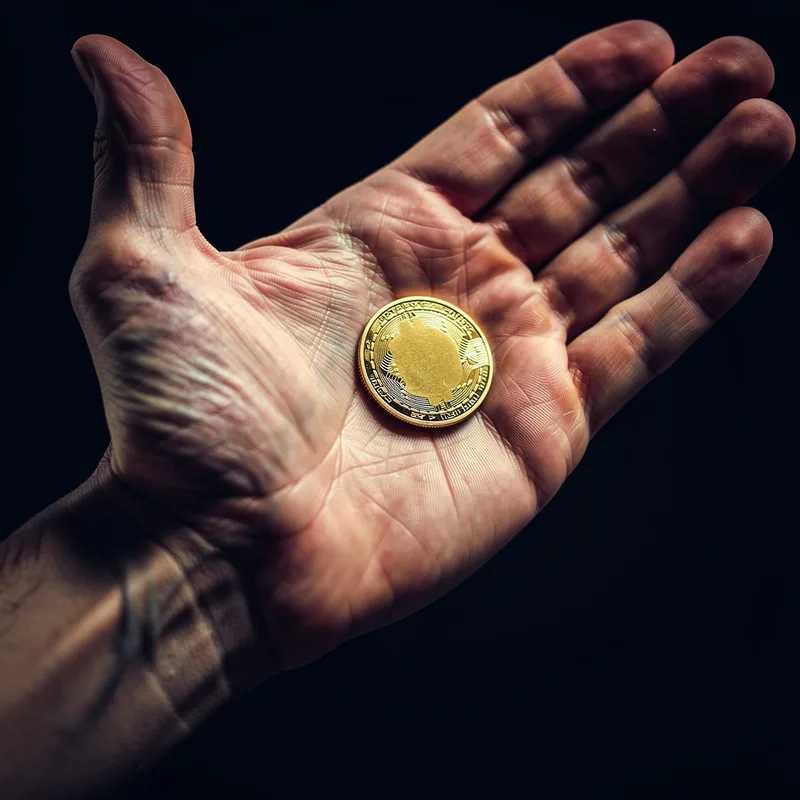
to palm
 16
6.8
16
6.8

- verb
- /pɑm/
- She quickly palmed the small item before her friend could see it.
- palm a card
- palm a ball
- try to palm
Loading YouTube…
Watch on YouTubeTo this day, I can barely palm a standard playing card.
- To this day, I can barely palm a standard playing card.
Examples
-
I took five or six cubes, palming them as the tray went past.
Fiction book (1997) -
To this day, I can barely palm a standard playing card.
-
It helps me hold the things I need in the palm of my hand.
-
Mote smoothly palmed a cigarette lighter from the display next to the Swisher Sweets and left.
Fiction book (1997) -
When Michel can't open the ketchup bottle, Francesca grabs it, palms the top skillfully, and twists it off.
Fiction book (1995) -
He managed to palm the coin without anyone noticing during the magic trick.
-
The magician palmed the card and made it disappear in front of the audience.
Antonyms


Idioms


To pay someone for a service, especially to have them tell your future

- Informal
To give someone money secretly to make them do something for you

Phrasal Verbs

Compounds

 11
1.8
11
1.8
A city in southeast Florida on the mainland near Palm Beach with beaches, shops, and warm weather




 1
3.4
1
3.4
The Sunday before Easter when Christians remember Jesus' entry into Jerusalem and hold palm leaves


- US
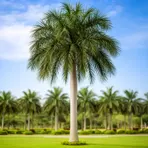
A small palm tree from southern Florida and the West Indies that looks like the silvertop palmetto


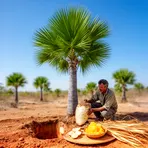


- US
A tall tropical palm tree with large nuts that give oil and a hard material like ivory

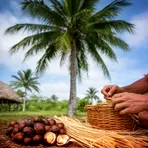

- South African
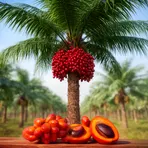
A tall tropical tree from West Africa whose fruit is used to make palm oil

A palm tree native to Central and South America that produces oil from its fruit


- Indian
A small meat-eating mammal from Southeast Asia with dark bands and a long tail

- Specialized
A tall palm tree from northern Brazil that has hard nuts with oil and a white core used like ivory

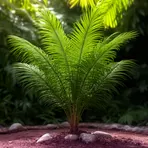
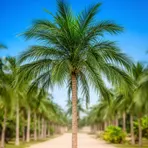


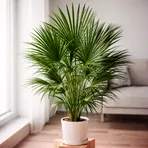

A palm tree with fan-shaped leaves that grows in the southern United States and the Caribbean
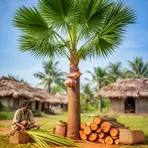

- Specialized
A small tropical plant with fan-shaped leaves, thin stems, and loose fibers at the leaf bases

- Australian
A tall palm tree whose wide leaves people use to make roofs and weave baskets
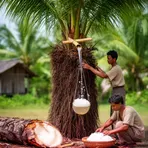
- Specialized
A palm tree with a fibrous base that gives sweet sap for wine and a trunk used to make sago


A South American palm tree with no visible trunk that produces hard white nuts used for carving


- Indian
A tall palm whose sweet sap makes jaggery and whose soft inner trunk gives sago

- Specialized
A tall palm tree from Brazil with very large split leaves and strong stems used for building or weaving


- Specialized
A large tropical tree with very long feather-like leaves whose leaf stems give strong fiber
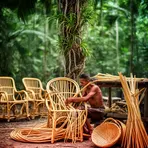


- Philippine
A small wild animal like a cat with spots or stripes that lives in trees in Southeast Asian forests


- Specialized
A group of mainly tropical plants like coconut and date trees with large leaves

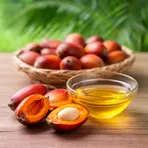


A tall tree with fan-shaped leaves used for roofing and weaving, hard wood, and sweet sap used to make wine

- Specialized
A Brazilian palm with long stiff fibers used to make ropes, brooms, and mats

- Specialized
A Brazilian palm with strong leaf fibers used to make ropes and brushes

- Philippine
A large tropical palm tree whose sweet sap makes sugar and wine and whose trunk gives sago

- Indian
A tall palm tree from southern India and Sri Lanka with very large leaves used as umbrellas or for writing
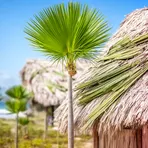
- US
A small palm tree from southern Florida and the West Indies with leaves used to cover roofs


- Specialized
A Chinese palm with thinner stems and leaves than the common lady palm

A tropical plant with large leaves and a dark red flower sheath grown for its edible underground stems or decoration


Surface Forms
Etymology
The verb palm comes from using your palm to hide or hold something out of view, like a magician hiding a card. So, to palm something is to secretly hold it in your hand.