
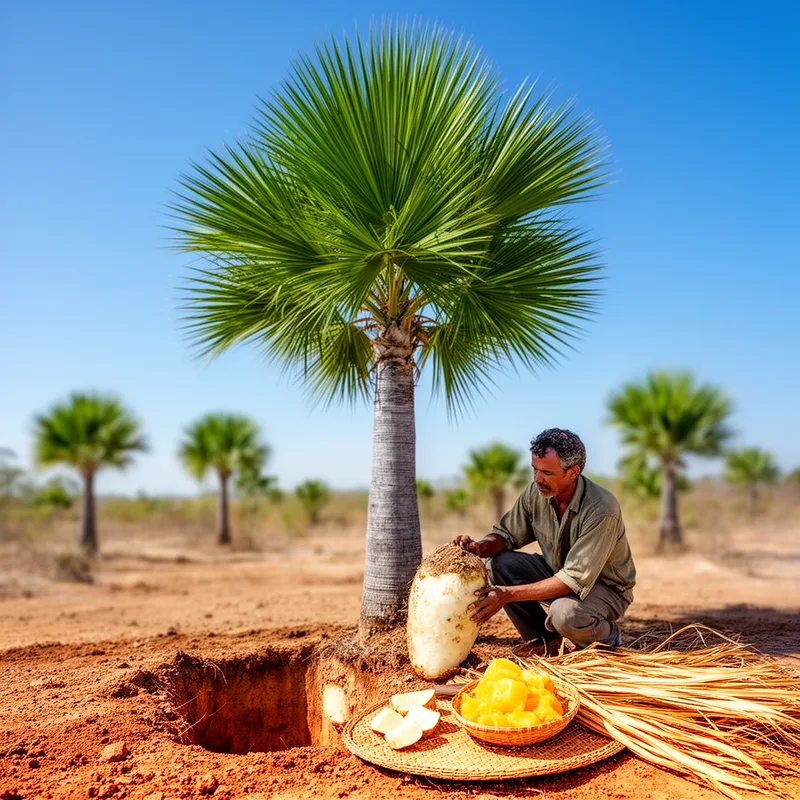
carnauba palm
- noun
- /kɑrˈnɔːbə pɑlm/
- The carnauba palm is prized for its wax, often used in polishes and cosmetics.
Examples
-
Farmers in northeastern Brazil harvest the leaves of the carnauba palm to extract fiber and wax.
-
Known as the 'tree of life' in its native region, the carnauba palm plays a crucial role in local economies.
-
The carnauba palm is native to Brazil.
-
Many carnauba palms grow in the northeastern region of Brazil.
-
Farmers in northeastern Brazil harvest the leaves of the carnauba palm to extract fiber and wax.
-
The carnauba palm is prized for its wax, often used in polishes and cosmetics.
-
Known as the 'tree of life' in its native region, the carnauba palm plays a crucial role in local economies.
Synonyms

A Brazilian fan palm with edible roots and leaves used for fiber and yellow wax

A Brazilian palm tree that gives yellow wax and leaf fiber
Surface Forms
Morphology
This is a straightforward noun–noun compound naming a type of palm: combining 'carnauba' (a fan palm known for its wax) with 'palm' (a tropical tree) yields a specific palm species. The meaning is directly compositional and follows common English patterns for naming plants, so a learner who knows both constituents will understand it.
Etymology
Carnauba palm is a fan-shaped palm from Brazil whose stiff leaves are scraped to make a shiny wax and strong fiber. Because this plant gives both valuable 'wax' for polishes and useful materials for local life, people call it the 'tree of life' and it is prized for those practical uses.

