
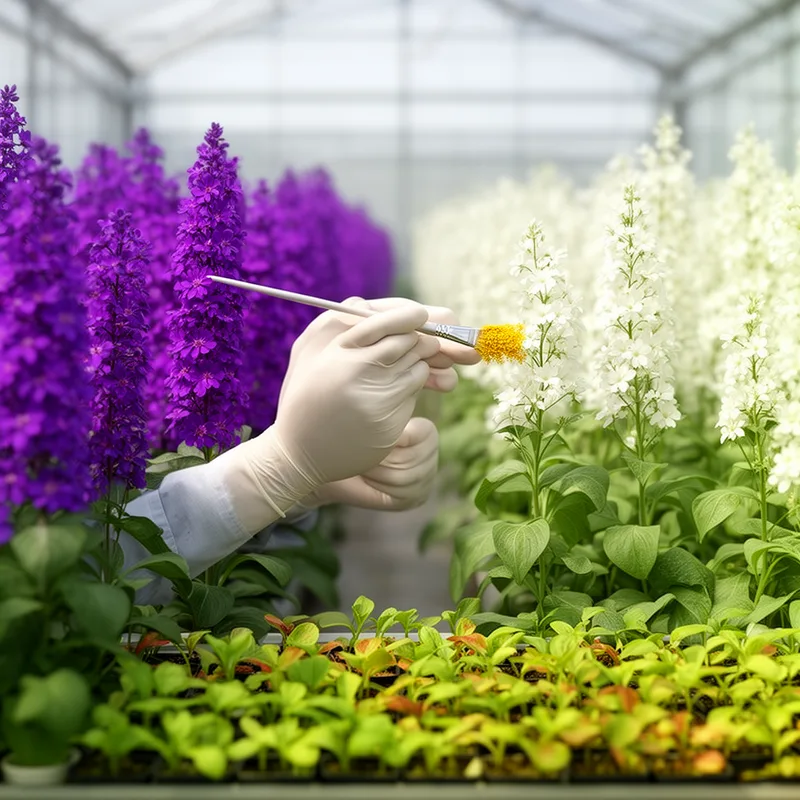
outcrossing
- noun
- /ˈaʊtˌkrɔsɪŋ/
- Specialized
- Moreover, synchronous development of inflorescences within a crown, combined with asynchrony of flowering between individuals, ensures outcrossing and thus maintains high levels of heterozygosity (Nason et al. 1998).
- outcrossing species
Examples
-
With outcrossing breeding systems, the movement of alleles between individuals and among populations is more likely than if inbreeding predominates.
Academic text (2002) -
The production of such unisexual gametophytes can increase the frequency of outcrossing (reviewed in Schneller et al. 1990).
Academic text (2002) -
There also appear to be both genetic and chemical mechanisms to promote outcrossing in homosporous species.
Academic text (2002) -
Perhaps because of the perceived simplicity of the pteridophyte systems, any sophistication that would promote outcrossing was considered unlikely.
Academic text (2002) -
Thus, as plant species become increasingly rare, they must either invest more in floral rewards or endure lower rates of outcrossing (Roubik 1993).
Academic text (2005) -
Production of a pheromone (antheridiogen) by gametophytes of some species may enhance the frequency of outcrossing.
Academic text (2002) -
All viable double mutant strains were verified by outcrossing to N2 and reisolation of each single mutant.
Academic text (2016) -
Excesses in heterozygote frequencies are expected in outcrossing species, while excesses in homozygote frequencies are considered characteristic of inbreeding species.
Academic text (2002) -
Moreover, the frequent coevolution of plants with host-specific pollinators diminishes the probability that an obligate outcrossing species will ever reproduce in a new habitat.
Academic text (1990) -
The practice of outcrossing can help plants adapt to changing environments by introducing new genetic material.
Synonyms

 7
7.2
7
7.2

Breeding two different plants or animals to make a hybrid
 4
6.2
4
6.2
Animals or plants from different groups produce mixed young
 3
6.1
3
6.1
Breeding two different plants or animals to make offspring with mixed traits
 2
4.4
2
4.4
Mixing different kinds of animals or plants to make young with chosen traits


 1
6.8
1
6.8
Mating animals or plants that are not closely related to make their genes more different
 1
6.3
1
6.3
Crossing different plants or animals to make new kinds

A process in which different breeds or groups mate to make hybrid young

A process of making something new by joining two different species or languages

Mixing different breeds to make animals or plants with mixed traits
How Diverse

Surface Forms
Morphology
Etymology
Outcrossing combines out ('outside') and cross ('to mix' or 'breed'), so picture crossing your plants or animals with ones from outside your group. That's why outcrossing means breeding different groups together to bring in new genes and more variety.