
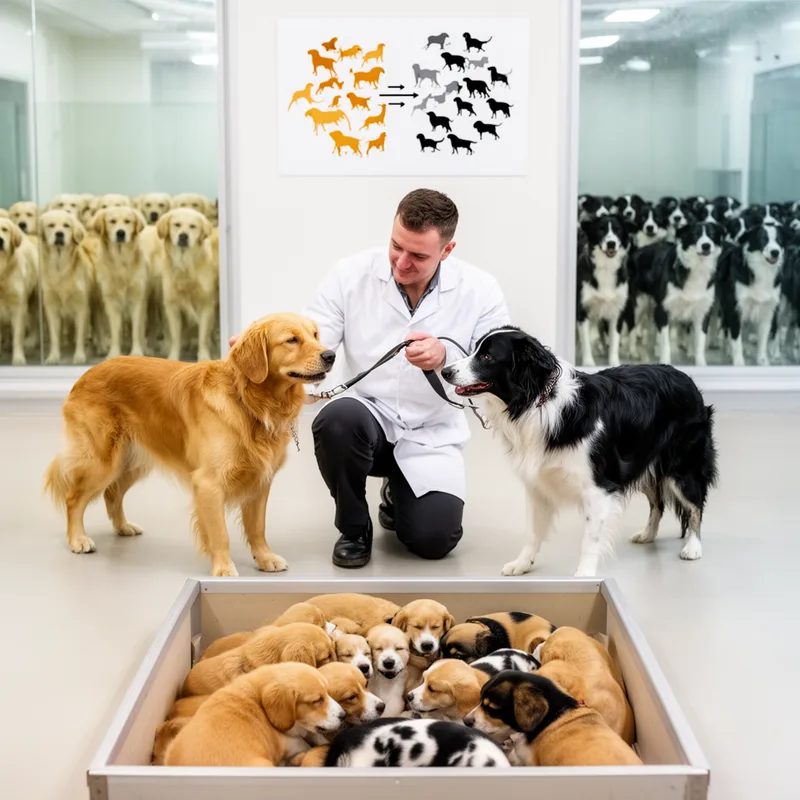
to outcross
- verb
- /ˈaʊtˌkrɔs/
- Specialized
- To prevent inbreeding, breeders commonly outcross plants with different varieties.
Examples
-
Species whose gametophytes have a low isolate potential (that is, they rarely form sporophytes when isolated) should be outcrossing in nature.
Academic text (2002) -
Inbred plants were, on average, shorter, flowered later, weighed less, and produced fewer seeds than those that were outcrossed.
Academic text (2010) -
Thus, a species whose populations all contain the same alleles at about the same frequencies is likely to be primarily outcrossing.
Academic text (2002) -
Approximately 6,000 species of native plants, or approximately one-third of the total species in the United States, are outcrossed via pollinators.
Academic text (1997) -
An ability to outcross at very low population densities may also have lowered extinction rates over evolutionary time scales and thus contributed to the diversity of regional species pools in Ficus.
Academic text (2005) -
However, for normally outcrossing organisms, a higher inbreeding coefficient is generally accompanied by inbreeding depression with negative effects on most fitness components.
Academic text (2011) -
But given the importance of outcrossing in tropical rainforests, plants can only be as rare as their pollinators allow them to be, and hence pollination is potentially a major factor limiting plant species richness.
Academic text (2005) -
Translating this to the biology of the species, at F = -1, the populations would be highly outcrossing; at F = 0, the populations would be mating randomly; and at F = +1, the populations would be highly inbred.
Academic text (2002) -
It may be that as species become established on islands, there is a shift in breeding systems from an inbreeding mode that facilitates single-spore colonization to an outcrossing mode.
Academic text (2002) -
Farmers often outcross their livestock to enhance genetic diversity and improve health.
Synonyms

 23
3.9
23
3.9

To breed two different varieties or species to produce offspring
 3
7.0
3
7.0
To cross two different plants or animals to make a new kind
 3
4.6
3
4.6
To make an animal or plant by mating two different kinds
 1
6.5
1
6.5
To mate with another animal or plant of a different type


 1
7.2
1
7.2
To breed animals or plants with unrelated ones to increase variation in their genes

To mix pollen from two different plants to make new kinds
How Diverse

Surface Forms
Morphology
Etymology
Outcross comes from out- ('outside') and cross ('to mate'), so to outcross is to breed an animal or plant with another from a different line to add genetic variety and help prevent inherited problems.