

to number
 39
1.0
39
1.0

- verb
- /ˈnʌmbər/
- Aboriginal people in Australia currently number about 300,000, slightly less than 2% of the total Australian population.
- numbered over one million
- population numbered
- numbered about 10,000
Loading YouTube…
Watch on YouTubeNext to is to number six is to stay away from all smoke.
- Next to is to number six is to stay away from all smoke.
Examples
-
Its inmates numbered about 80,000.
-
And our first families number less than half the total number of family leaders.
Academic text (1991) -
By then we'll number in the hundreds, thousands even.
-
Our sources number the dead as low as 10, as high as 50.
-
How many do they number?
-
The rebels number roughly 2000 men and women.
-
They number in the millions!
-
Oil tankers in operation today number 3,500 and include some of the world's largest ships.
Academic text (2008) -
In 2001, active participants in the same event still numbered at least 10,000, but not 100,000.
Academic text (2008) -
The survey showed that the volunteers number over 1,000 this year.
Synonyms
 ∞
1.0
∞
1.0
To say numbers one by one to find the total
 168
1.0
168
1.0
To add two or more numbers to find their total
 65
1.0
65
1.0
To add numbers together to find the whole amount
 19
6.3
19
6.3
To list or count items one by one
 18
3.0
18
3.0
To count or add things like points and votes
Idioms


- Literature
3
9.3
A clear top item on charts or rankings that is much more popular than others


Phrasal Verbs


Compounds




 34
2.6
34
2.6
A number the United States gives to people to show who they are, pay taxes, and get government benefits



- Specialized
7
3.6
A whole number greater than 1 that you can divide only by 1 and itself


 4
1.1
4
1.1
A phone number to call for help in an emergency, for example the police or an ambulance

- Specialized
3
4.3
A device or program that produces numbers that do not follow a pattern


- Informal
3
4.5
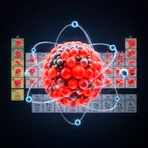
A person who works with many numbers and can do difficult calculations using computers


- Specialized
1
3.4
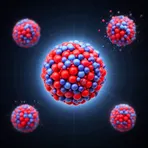
Number of protons in an atom's center that shows its place in the periodic table


- Specialized
1
9.2
A number of protons or neutrons that makes a nucleus especially stable

- Specialized
1
7.9
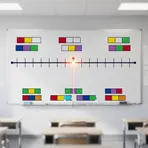
A number in the form a plus b i, where i is the square root of minus one



- Specialized
1
5.6
A number that cannot be written as a fraction, for example π or √2


- Specialized
1
3.0
A secret number you use to prove who you are and open accounts

- Specialized

 1
4.0
1
4.0
A code of letters and numbers on a library book that shows where it is on the shelf

- Specialized
1
2.4
A number that shows how many things there are, not their order, for example one, two, three

- Specialized
1
6.8
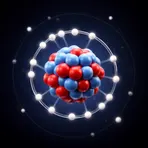
A number in a list where each equals the sum of the two before, starting with 0 and 1

- Specialized
1
5.5
A number that shows how things like prices change over time or between places
- UK
1
4.6
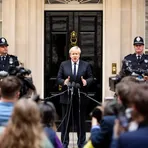
The British Prime Minister, their home at 10 Downing Street, or the main attacking player in football

- Specialized
1
7.2
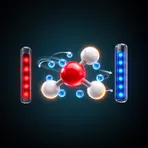
A number that shows how many electrons an atom has lost or gained in compounds and ions


- Specialized
1
9.9
A number that is not a solution of any polynomial equation with rational coefficients

- Specialized
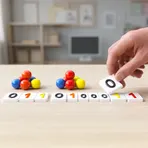
The difference in number between matter particles and antimatter particles that stays the same when particles react

- Specialized
A number showing how hard a metal is by pressing a steel ball into it
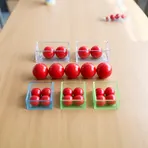
- Specialized
A whole number greater than one that can be divided evenly by a number other than one and itself

- Specialized
An amount shown using two or more different units, like one hour and ten minutes


- Specialized
A way of writing numbers that uses twelve as its base and digits 0 to 11

- Specialized
A number that shows a United States bank's location and tells which bank it is
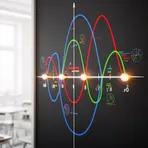
- Specialized
A number that solves a polynomial equation with rational coefficients

- Specialized
A radioactive metal made by shooting neutrons at plutonium in a lab

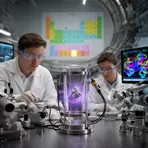
- Specialized
A radioactive metal element called nobelium with atomic number 102 that scientists use only for research
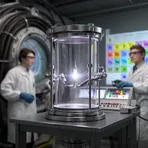
- Specialized
A radioactive element called lawrencium that scientists make in a lab


- Specialized
A man-made radioactive chemical element called rutherfordium with symbol Rf

- Specialized
A soft white metal found in rare earth minerals, used in special glass and camera lenses


- Specialized
A soft metal called neodymium from the rare earths used in strong magnets and lasers


- Specialized
A soft silver metal from the rare earth group that is radioactive and has no stable forms


- Specialized
A silvery metal called samarium that is used in powerful magnets and electronics
- Specialized
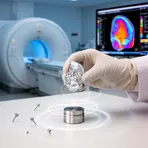
A silvery-white chemical element used in magnets and medical imaging

- Specialized
A rare earth metal called holmium that helps make very strong magnets

- Specialized
A metal found in minerals and used in some lasers and glowing materials


- Specialized
A colorless, odorless gas that makes up most of the air and is needed by living things

How Exact

Surface Forms
Etymology
Number comes from Latin numerus, meaning 'a count'. So to number things can also mean to count them or to include them in a total.