
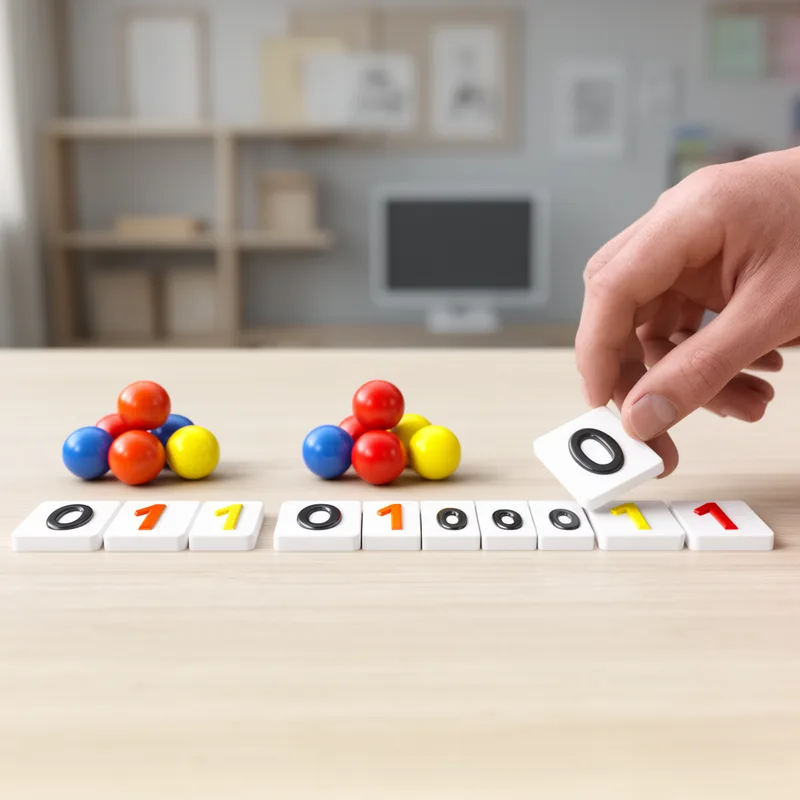
binary number system
- noun
- /ˈbaɪnəri ˈnʌmbər ˈsɪstəm/
- Specialized
- Computers process information using the binary number system, which relies on only two digits: 0 and 1.
Examples
-
The binary number system uses only two digits.
-
Early digital circuits were designed to operate on the principles of the binary number system.
-
Learning how to convert decimal numbers to the binary number system is an essential skill in computer science.
-
Can you explain how the binary number system works?
-
Computers operate using the binary number system, which represents data with only 0s and 1s.
-
The binary number system is essential in computing because it simplifies complex data into two basic states.
-
In mathematics, the binary number system is used to perform calculations in base two, relying on just two digits.
Synonyms

 1
3.5
1
3.5

A way of writing numbers with only 0s and 1s

A number system that uses only the numbers 0 and 1, often used by computers

A way of writing numbers using only the digits 0 and 1
A way to write numbers and information using only the digits 0 and 1
Surface Forms
Morphology
The phrase is fully compositional: 'binary' (relating to base‑2), plus 'number' and 'system' yield the straightforward meaning of a numbering system that uses binary digits. This follows normal English compounding patterns and would be understandable to a B1 learner who knows the constituent words.
Etymology
The term binary number system comes from a simple image: a row of switches that are either 'on' or 'off', like 1 or 0. So, it means a way of counting that uses only the two digits 1 and 0, which is how computers store information.