

binary numeration system
- noun
- /ˈbaɪnəri ˌnjuːməˈreɪʃən ˈsɪstəm/
- Specialized
- Computers process data using the binary numeration system, which relies solely on the digits 0 and 1.
Examples
-
Learning to convert decimal numbers to the binary numeration system is essential for understanding digital electronics.
-
The binary numeration system underpins all modern computer operations and data storage.
-
The binary numeration system is fundamental to computer science.
-
Can you explain the binary numeration system?
-
Computers process data using the binary numeration system, which relies solely on the digits 0 and 1.
-
Learning to convert decimal numbers to the binary numeration system is essential for understanding digital electronics.
-
The binary numeration system underpins all modern computer operations and data storage.
Synonyms
 1
3.5
1
3.5

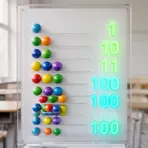
A way of writing numbers with only 0s and 1s

A way to write numbers using only 0 and 1

A way of writing numbers using only the digits 0 and 1
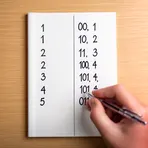
A way to write numbers and information using only the digits 0 and 1
Surface Forms
Morphology
binary + numeration + system
The phrase is fully compositional: 'binary' specifies base-2, 'numeration' refers to numbering/counting, and 'system' denotes a structured set — together they straightforwardly mean a number system using only 0 and 1. This regular modifier+noun construction is cross-linguistically common, so a B1 learner who knows the constituents can infer the meaning.
Etymology
Binary numeration system comes from the simple image of using only two signals: imagine a row of lamps that are either 'off' or 'on', the two digits 0 and 1. Because any number can be made by different patterns of these 'off' and 'on' digits, the system is used to count and store information in computers.