

nullification
 6
8.6
6
8.6

- noun
- /ˌnʌlɪfɪˈkeɪʃən/
- Formal
- The 10th Amendment gives states and individuals the power of nullification for laws the federal government is not constitutionally authorized to enact.
Examples
-
Yet even extreme libertarians cannot endorse the nullification of basic rights-protecting law.
Academic text (2017) -
Weedman's single defense tactic at this point is jury nullification.
Blog text (3) -
Everything you wanted to know about state nullification but were afraid to ask...
Blog text (31) -
And the court will not allow you to hear a word about jury nullification if they can possibly help it.
Blog text (6) -
In a nutshell, jury nullification is the right of jurors to judge the law as well as the defendant.
Blog text (6) -
I do not want what Zorn advocates, which is nullification of the law because it does not suit someone's political interests.
Blog text (24) -
Colorado just used nullification in the case of legalizing marijuana, so now the ball is in the Fed's court.
Blog text (19) -
The classification of the Palestinian refugees as "absentees," as non-persons, as persons who effectively did not exist in the view of this law, entailed the nullification of all rights to property, residence, and citizenship in Israel.
Academic text (1995) -
Kuby, who in association with William Kunstler has defended clients such as Atlanta child murderer Wayne Williams and the World Trade Center bombing defendants, says nullification is most appropriate in cases such as drug possession, which he considers a victimless crime.
Academic text (1995) -
The nullification of the law led to widespread protests across the country.
Synonyms
 24
6.5
24
6.5
The legal ending of a marriage or agreement so it is as if it never existed
 9
7.3
9
7.3
An official decision to cancel something given or allowed before
 3
8.9
3
8.9
The official ending of a law or agreement
 1
7.3
1
7.3
Official ending that makes a legal document or decision no longer accepted by law
 1
6.7
1
6.7
Cancelling the effect of something that was done earlier
 1
9.9
1
9.9
Something that has no legal force or effect

The act of making a legal agreement not valid
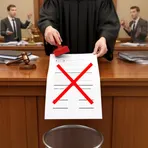
A situation when a document or agreement has no legal force

The official removal of something like a law or rule
Antonyms

How Complete
- Formal
24
6.5

- Formal
3
9.9
- Formal
6
8.6
- Texting
63
1.9
- Formal
120
3.5
Surface Forms
Morphology
Etymology
Nullification comes from the small word null meaning 'nothing' and the ending -ification meaning 'making'. So nullification is the act of making something 'no effect' or 'nothing', which is why we use it for canceling a law or agreement.