

nullity
 1
9.9
1
9.9

- noun
- /ˈnʌlɪti/
- Formal
- In legal terms, the nullity of the decision meant it had no force or effect.
- declaration of nullity
Examples
-
Once my wife had found a lover, she had no difficulty finding priestly and bishop support for our divorce and seeking nullity.
Blog text (30) -
You would, quite simply, end the civil marriage, or at least immediately remove yourself from it temporarily if you are awaiting a declaration of nullity.
Blog text (30) -
What they have wanted is a declaration that the excommunications were invalid; they wanted a decree of nullity.
Blog text (26) -
The right under the collective bargaining agreement to supplemental procedural steps preliminary to a decision to grant or withhold tenure is not rendered a nullity by the right of the board to deny tenure without explanation.
Blog text (31) -
The bargained-for right to supplemental procedural steps preliminary to a board of education's final action to grant or withhold tenure to a teacher is not to be rendered a nullity because of the board's right to deny tenure without explanation.
Blog text (31) -
The court issued a ruling of nullity for the improperly executed contract.
-
After reviewing the evidence, the judge declared the agreement a legal nullity.
Synonyms
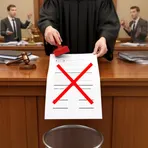
A situation when a document or agreement has no legal force
Antonyms


How Valid

Surface Forms
Morphology
Etymology
Nullity comes from the Latin nullus meaning 'not any' and the ending -ity meaning 'state of', and it is related to the common word null and to nullify ('to make nothing'). So a legal nullity is treated as 'nothing' by the law and has no legal value.