

monovalent
9.1
Able to join with only one other atom, for example hydrogen
- adjective
- /ˌmɒnəˈveɪlənt/
- Specialized
:
monovalente
- In chemistry, a monovalent element can form only one bond with other elements, such as hydrogen.
Examples
-
Sodium is a monovalent ion that readily combines with chlorine to form table salt.
-
Elemental charges, electron or monovalent ion charges.
-
Lithium is considered a monovalent metal because it has a single electron available for bonding.
Synonyms

9.6
Able to combine with one atom, like hydrogen
is the same in meaning but uses a different technical term
Antonyms

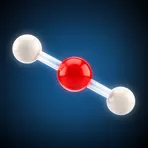
How Many Valences
tetravalent
- Specialized

trivalent

 1
8.6
1
8.6
- Specialized

 1
8.6
1
8.6
divalent
- Specialized
monovalent
- Specialized
Surface Forms
monovalent positive
Morphology
monovalent = valent (transparent) = mono + valent
The meaning follows straightforwardly from mono- 'one' plus valent 'having one valence', which matches the chemical sense exactly.
Etymology
Monovalent comes from mono- meaning 'one' and valent meaning 'power to join', an idea you can also see in the word valence. So a monovalent element has the ability to join to just 'one' other atom (it makes one bond).