
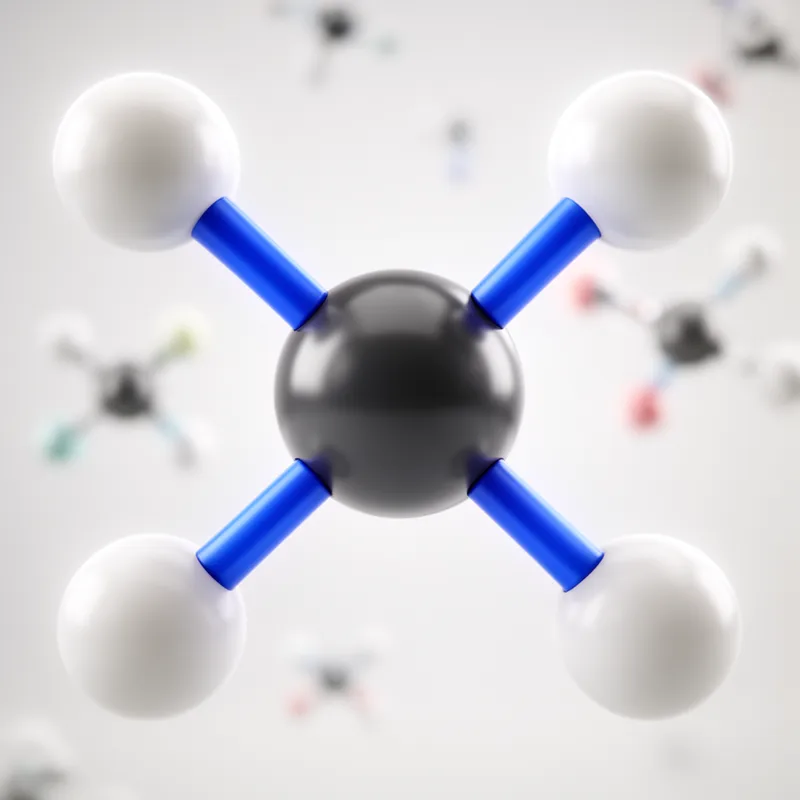
tetravalent
- adjective
- /ˌtɛtrəˈveɪlənt/
- Specialized
- In organic chemistry, tetravalent atoms like carbon are central to forming diverse molecules.
Examples
-
Discovered that you could react triethylamine with an alkyl iodide and generate the salt and tetravalent ammonium salt as an iodide.
-
Carbon is considered tetravalent because it can form four bonds with other atoms.
-
It's going to oxidize this manganese hydroxide to this tetravalent manganic species.
-
The tetravalent nature of silicon allows it to bond with four other atoms, making it versatile in compounds.
Synonyms

Able to form four bonds with other atoms
How Many Bonds
- Specialized

- Specialized
- Specialized


 1
8.6
1
8.6
- Specialized
- Specialized
Surface Forms
Morphology
tetravalent = valent (transparent) = tetra + valent
Formed by the numeral combining form 'tetra-' (four) plus 'valent' (having valence), yielding the straightforward meaning 'having valence of four'.
Etymology
The word tetravalent comes from the parts tetra- meaning 'four' and -valent meaning 'having the power to join', as in valence. So a tetravalent atom is one that can 'form' or 'make' four chemical bonds.