

lithification
- noun
- /ˌlɪθɪfɪˈkeɪʃən/
- Specialized
- Over time, layers of mud and sand undergo lithification to form sedimentary rocks.
Examples
-
During lithification, sediments are compacted tightly and cemented to create rock.
-
During lithification, sediments are compacted tightly.
-
Geologists study lithification to understand how ancient rock layers were created.
-
The lithification process can take thousands or even millions of years.
-
The process of lithification takes millions of years.
-
Over time, layers of mud and sand undergo lithification to form sedimentary rocks.
-
Geologists study lithification to understand how sediment is transformed into solid rock.
Synonyms

Small pieces of rock or sand become hard and form a solid mass
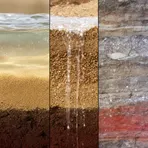
Changes that turn soft sand or mud into hard rock over time
How Solid


Surface Forms
Morphology
lithification = lithify (opaque) = lith + ify + ation
The noun is formed from the technical verb 'lithify', but the Greek combining form 'lith-' is not transparent to most learners, so the meaning is not easily recoverable from the parts.
Etymology
Lithification comes from the Greek root litho- meaning 'stone' and the part -fication meaning 'making'. So lithification literally means 'making into stone', which is why it describes the process that turns loose mud and sand into hard rock.