

sediment
 43
4.2
43
4.2

- noun
- /ˈsɛdɪmənt/
- Specialized
- After the flood, the lake was filled with sediment that had settled from the muddy waters.
- lake sediments
- deposited sediment
- organic sediments
Loading YouTube…
Watch on YouTubeSo when trees died, their trunks just piled up in the forest, and over millions of years they were covered by sediments and turned into coal.
- So when trees died, their trunks just piled up in the forest, and over millions of years they were covered by sediments and turned into coal.
- And, and there are pieces in there that are truly gorgeous, but it took all the sediment to find the gold, so to speak.
Examples
-
The fishermen turned over the sediment with their drags and picked out the clams.
Academic text (1990) -
For example, a large rainstorm might wash nutrient rich sediment from a forest into a lake.
-
All right, So what I wanted to show you is just how just how much sediment was taken out.
-
It's based off sediment we got.
-
And then right here, this is the bottom and you can see all the sediment, but honestly that is not a whole lot.
-
Real fruit often leaves some sediment in the bottle, which is fine water.
-
One kind of climate allowed sediments in a lake to look like this.
-
Agricultural practices and suburban development contribute to the flow of nutrients and sediment into the bay.
Academic text (1999) -
However, their borders gradually change as rivers bring more sediment in and storms wash sediment away.
-
And you know, we know a lot about the concentrations of contaminants in sediments in water.
Synonyms
 78
3.5
78
3.5
A layer of sand or minerals that nature leaves over time
 18
3.7
18
3.7
Fine soil left by moving water in a river or harbor

Small particles that sink to the bottom of a liquid
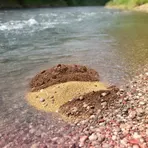
Soil, sand or small stones that a river drops when it slows down

Loose soil like sand or clay that a river leaves when it slows
Compounds
How Foul

 1
9.9
1
9.9
 46
2.0
1
1.0
46
2.0
1
1.0
- Specialized
43
4.2
26
1.0
Surface Forms
Morphology
sediment = sed + ment
The noun appears to be built from the combining form 'sed-' plus the noun-forming suffix '-ment'; 'sed' is not a standalone modern English word, so learners cannot reliably derive the meaning from familiar morphemes.
Etymology
Sediment comes from the Latin root sedere meaning 'to sit'. So sediment is the solid stuff that 'sits' at the bottom of a liquid.