
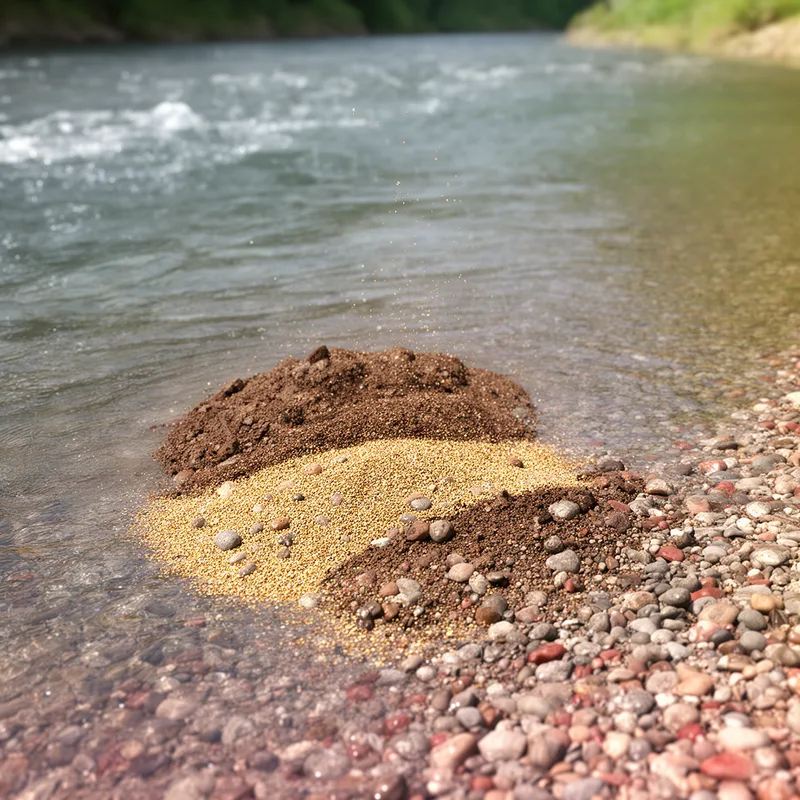
alluvial sediment
- noun
- /əˈluːviəl ˈsɛdɪmənt/
- Specialized
- Over thousands of years, alluvial sediment has built up to form fertile agricultural land along the delta.
Examples
-
The river deposited alluvial sediment across the floodplain after the heavy rains.
-
The riverbanks are rich in alluvial sediment.
-
Scientists collected samples of alluvial sediment to study the history of the river's movement.
-
Farmers often rely on alluvial sediments for fertile soil.
-
The researchers examined the alluvial sediment to understand the historical flooding patterns of the river.
-
Farmers in the valley often rely on nutrient-rich alluvial sediment to enhance their crop yields.
-
The construction site revealed layers of alluvial sediment, indicating that the area was once a thriving riverbed.
Synonyms

 43
4.2
43
4.2

Small bits that collect at the bottom of water or other liquids

Loose soil like sand or clay that a river leaves when it slows

Loose sand, clay, and small stones left by river water

Loose soil and sand that water carries and leaves on banks or fields

Fine earth left by rivers that is soft and very good for growing crops
How Coarse

Surface Forms
Morphology
The meaning is directly and compositionally derived from 'alluvial' (relating to river-transported deposits) modifying 'sediment' (particles deposited by water). This noun phrase simply specifies the type/source of the sediment and follows standard, cross-linguistically common modifier + noun patterns, so a learner who knows both constituents will understand it.
Etymology
Alluvial sediment starts with a simple picture: a river carries soil, sand, and small stones and then drops them when the water slows. The word alluvial points to the river and sediment is the material left behind, so the phrase means 'material carried by water and deposited when the flow slows'.