
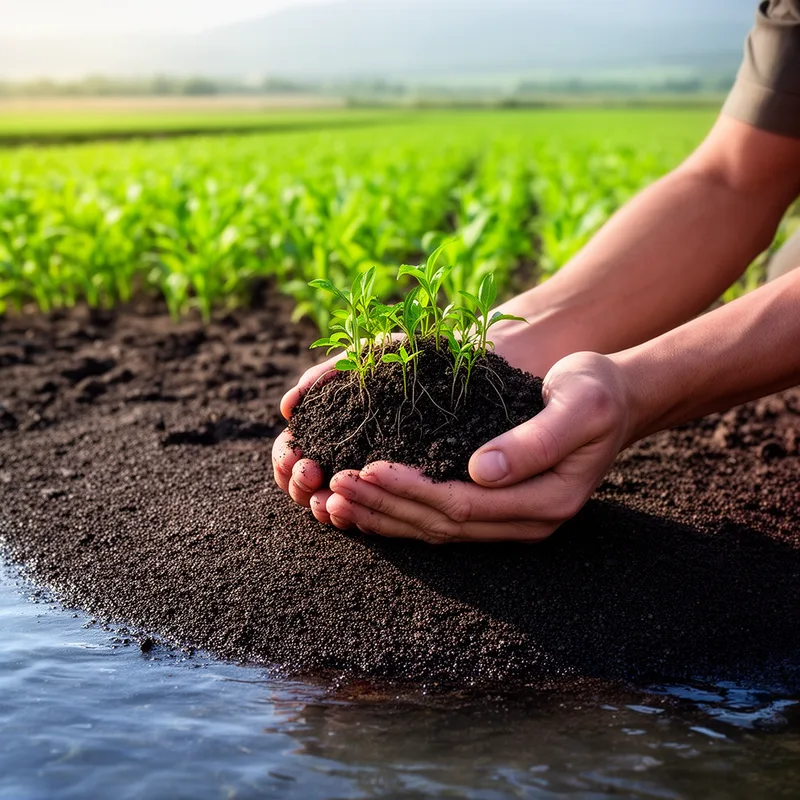
alluvial soil
- noun
- /əˈluːviəl sɔɪl/
- Specialized
- In an 11-month growing season, up to three varieties of rice and other crops are raised in the rich alluvial soil left behind by centuries of flooding.
- fertile alluvial soil
- rich alluvial soil
Examples
-
Because of the geographic and physical nature of rivers, fertile alluvial soil is usually located at the mouth of rivers, where rivers often form deltas.
Academic text (2003) -
Rich alluvial soils, dry air, and year-long insolation are natural resources basic to the development of grape and melon cultivation.
Academic text (1994) -
These areas, however, are nearly flat and overlain with rich alluvial soils, making them ideal sites for cultivation.
Academic text (2012) -
In any event, there were deposits of alluvial soil that were more hospitable than the marls to early farmers and herders.
Academic text (2006) -
Mountainous as it is, Arcadia does have some valleys silted up with alluvial soil.
Academic text (1998) -
They are commonest in the lowlands, especially in fertile areas with alluvial soil.
Academic text (1990) -
Perennial streams flowing from the Wasatch Front and alluvial soils along the western base of the mountain range argued for agricultural possibilities.
Academic text (1997) -
All the elders with whom we spoke distinguished the fertile alluvial soils from the more common sandy, rocky terrain that did not retain water and was difficult to farm.
Academic text (2005) -
The low rainfall in the more arid regions of the valley and the irregularity of rainfall throughout the basin meant that access to the river-fed alluvial soils was critical to ensure household food security.
Academic text (2005) -
Farms in the floodplain thrive because they are built on rich alluvial soil that is perfect for growing crops.
Synonyms

Loose soil and sand that water carries and leaves on banks or fields

Loose sand, clay, and small stones left by river water

Soil, sand or small stones that a river drops when it slows down

Loose soil like sand or clay that a river leaves when it slows
How Fine


Surface Forms
Morphology
The meaning 'soil deposited by running water' is directly derivable from combining 'alluvial' (river- or water-deposited sediment) with 'soil' (earth layer), so the compound is compositional. This simple adjective+noun formation follows common cross-linguistic patterns and would be understandable to a B1 learner who already knows both constituent meanings.
Etymology
Alluvial soil comes from the image of a river washing fine soil onto the land during floods. These river deposits make the ground rich, so alluvial soil means 'fertile' earth left by moving water.