

isomorphism
- noun
- /ˌaɪsəˈmɔrfɪzəm/
- Specialized
Examples
-
And the degree of isomorphism with how we act as humans in our everyday lives was appealing to me.
-
Yet at the same time, fictional texts also contain other structures that reveal this isomorphism to be feigned.
Academic text (2004) -
The anarchic self breaks with "archic isomorphism" (including the tedium of modern political regimes).
Academic text (2016) -
This phenomenon is referred to as "institutional isomorphism" (Powell & DiMaggio, 1991) and explains the introduction of bachelor's degree programs as behavior by community colleges that seek to model the actions performed by 4-year colleges.
Academic text (2010) -
Thus, rational ideas and aesthetic ideas exhibit an inverted isomorphism: whereas rational ideas are concepts to which no intuition is adequate, aesthetic ideas prompt the imagination to bring forth a seemingly infinite field of representations to which no concept is adequate.
Academic text (2016) -
In biology, isomorphism describes the similarity in structure between different species, such as the wings of bats and birds.
-
The concept of isomorphism can be observed in how certain plants adapt similar shapes to thrive in similar environments.
-
Researchers study isomorphism to understand how different organisms develop similar features despite having different evolutionary paths.
Synonyms

 157
2.7
157
2.7

A likeness between things that makes them seem related
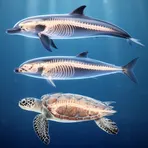
Similarity in shape and structure between different living things

A similar shape in animals, plants, or objects that are not closely related
Antonyms


How Similar
- Specialized
15
6.5

- Specialized
157
2.7
105
3.0
3
4.5
Surface Forms
Morphology
isomorphism = isomorph (transparent) = iso + morph + ism
The step from 'isomorph' to 'isomorphism' is a standard noun formation (-ism) and clearly denotes the state or concept of 'same form'.
Etymology
The word isomorphism comes from the parts iso- 'equal' and morph 'form', so it literally means 'equal form'. In biology, isomorphism is when two organisms or their parts have the same or very similar shape, which is why the word means similarity of form.