

homomorphy
- noun
- /ˌhoʊməˈmɔrfi/
- Specialized
- Biologists study homomorphy to understand how different species can independently evolve similar forms.
Examples
-
Some unrelated animals display remarkable homomorphy due to convergent evolution.
-
The principle of homomorphy can be observed in various crystalline structures that share similar shapes.
-
The concept of homomorphy is fascinating in evolutionary biology.
-
Many species exhibit homomorphy despite their different evolutionary paths.
-
Biologists study homomorphy to understand how different species can independently evolve similar forms.
-
Some unrelated animals display remarkable homomorphy due to convergent evolution.
-
Many species exhibit homomorphy despite their different evolutionary paths.
Synonyms

A trait that appears on its own in different species not from a common ancestor
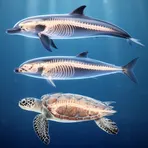
Similarity in shape and structure between different living things

A similarity of shape or structure across organisms and their parts

The fact of being similar in how something looks or behaves
Surface Forms
Morphology
homomorphy = homomorph (transparent) = homo + morph + y
The noun is formed by adding the productive noun-forming suffix '-y' to the base 'homomorph', and the meaning 'state of same form' follows directly from 'homo-' (same) + 'morph' (form).
Etymology
The word homomorphy comes from Greek parts homo- 'same' and -morph 'shape', so it literally means 'same shape'. Think of the homo- in homogeneous 'all the same' to help you remember that homomorphy describes different animals or objects that have a similar shape even when they are not related.

