
homoplasy
- noun
- /ˌhoʊməˈplæzi/
- Specialized
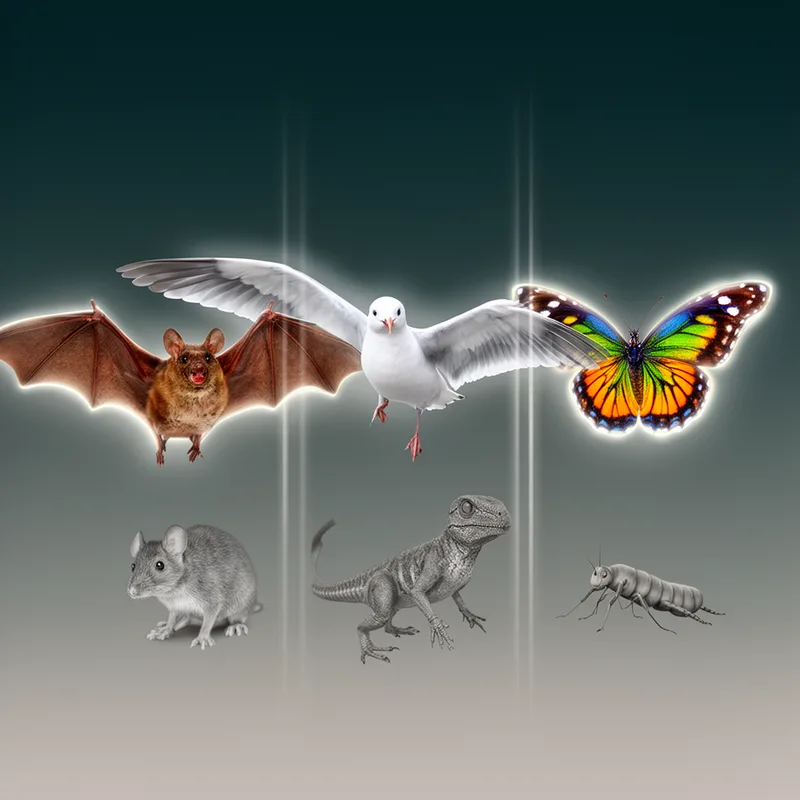
- Examples of homoplasy include the wings of birds and bats, which evolved independently.
Examples
-
So homology is helpful and homoplasy is confusing in determining phylogenies.
-
Researchers often study homoplasy to understand how environmental pressures can lead to similar traits in unrelated species.
-
The concept of homoplasy explains why different animals can have similar adaptations despite having separate evolutionary paths.
Synonyms

A similar shape in animals, plants, or objects that are not closely related
Surface Forms
Morphology
homoplasy = plasy (semi-transparent) = homo + plasy
The prefix 'homo-' ('same') is somewhat recognizable but the combining form '-plasy' is technical and unfamiliar to most learners.
Etymology
Homoplasy comes from Greek parts homo- meaning 'same' and -plasy meaning 'form'. That's why scientists use homoplasy for similar traits in different species, like wings in birds and bats, that evolved independently and are not from a common ancestor.

