
isomorph
 1
8.6
1
8.6

- noun
- /ˈaɪsəˌmɔrf/
- Specialized
Examples
-
Triglycine sulfate (TGS) and its isomorphs have very favorable properties, including high pyroelectric coefficients and relatively low permittivity.
Academic text (2005) -
Triglycine sulfate (TGS) and its isomorphs have very favorable properties, including high pyroelectric coefficients and relatively low permittivity.
-
In mathematics, an isomorph is a structure that maintains the same form or organization as another.
-
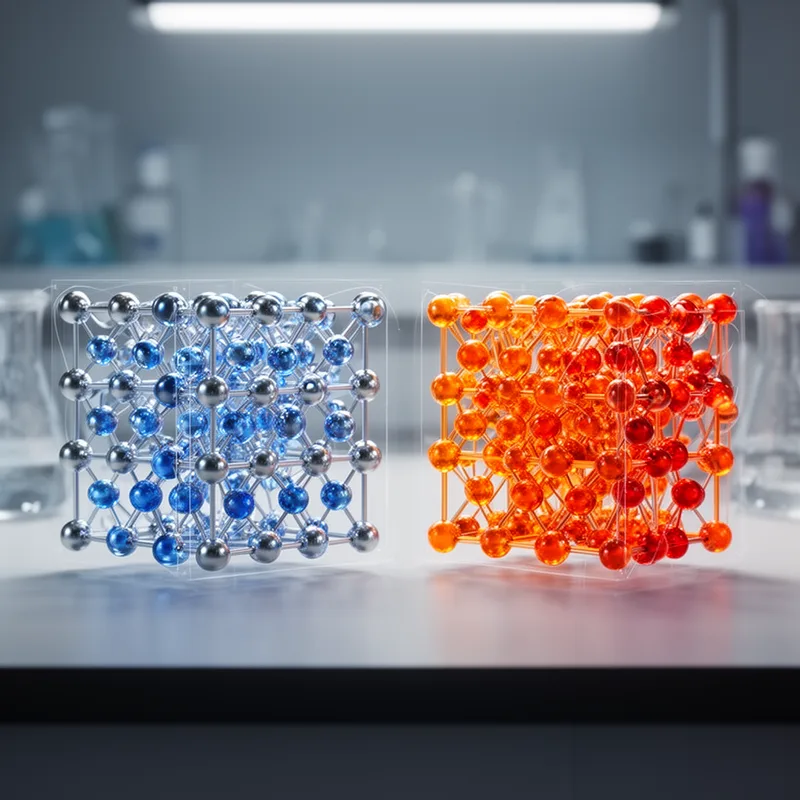
The chemist explained how different compounds can be isomorphic, sharing the same crystalline structure despite differing in chemical composition.
How Similar
- Specialized
1
8.6
 157
2.7
157
2.7
Surface Forms
Morphology
isomorph = morph (semi-transparent) = iso + morph
The combining form 'iso-' meaning 'equal' and 'morph' meaning 'form' make the meaning 'same form', but both are technical Greek combining forms that may be unfamiliar to average learners.
Etymology
Isomorph comes from Greek parts iso- meaning 'equal' and morph meaning 'shape' or 'form', so an isomorph is something that has the same form or structure as another.