

information
 ∞
1.0
∞
1.0

- noun
- /ˌɪnfərˈmeɪʃən/
- I'm trying to gather as much information as I can, you know?
- provide information
- access to information
- gather information
Loading YouTube…
Watch on YouTubeI think being bludgeoned with information is a bad thing.
- I think being bludgeoned with information is a bad thing.
- They're doing that because they, too, have information that Trump's winning.
- Don't allow their warping of information to warp the way you think.
- If you give me information, I can give you money.
- Some of like our most private information is held by these people.
- While most presenters simply convey information, Jobs inspires.
- You need algorithms to parse the information in some way.
- They were all given the same information except for the name.
- Then you can ask to have that information added to your account.
- And then, you know, we shared information about these things.
Examples
-
Many people rely on social media for information about current events.
-
But why do we do it, and what information should we expect it to reveal?
Academic text (2015) -
If you give good people bad information, they make bad decisions.
-
So given that information, what would you do?
-
If you give me information, I can give you money.
-
I just want whatever information you can get on this little boy.
-
I have been sent pretty much no information about this whatsoever.
-
I'm sorry, sir, but we're not allowed to give out that information.
-
They were all given the same information except for the name.
-
Thank you for that brand-new information.
Synonyms
 ∞
1.0
∞
1.0
Information and skills gained from study or experience
 349
1.2
349
1.2
Facts and details about people or things, often short
 215
1.6
215
1.6
Facts and numbers collected to study things or make decisions
 111
5.5
111
5.5
Information that helps planning and is often secret
 5
1.4
5
1.4
Small pieces of information about exact facts or a situation
Idioms
 16
3.4
16
3.4
You use it when telling someone something they may not know, often politely or to show they were wrong
Compounds

- Specialized
25
3.5
The use of computers and networks to store, find and send data


- Specialized
12
4.6
Secret facts about an enemy or danger that governments use

- Specialized
9
3.3
A set of tools and rules that help people in a company collect, store, and share records
 8
3.9
8
3.9
A time since the late 1900s when computers and digital communication are common

- Archaic
6
4.2
A large electronic network like the internet that moves information quickly

 3
6.6
3
6.6
Secret company facts not public that people often use illegally to make money in the stock market

- Specialized
3
4.0
Methods for collecting, storing, and using data with computers

- Specialized
2
6.7
To use information and computers to gain an advantage in war or politics

- Offensive
1
7.3
Someone who has little factual knowledge and follows simple slogans rather than facts

- Specialized
1
4.9
Study of how to measure, store, and send information with little loss
- Specialized
1
4.6
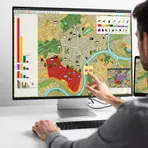
A computer program that stores, analyzes, and shows maps and data about places

- Specialized
1
3.8
The study of how people collect, organize, store, and find information using computers



 1
3.2
1
3.2
Data from studies about customers and markets that guide how a business sells or advertises products


- Specialized
1
4.6
A program that helps you record and organize contacts, calendars, and tasks

A part of the U.S. military that runs and protects computer and communication systems for top leaders

A U.S. Department of Defense center that collects and shares scientific and technical reports with government agencies and contractors

- Specialized
A computer system or database that gives information online

A code using seven bits to represent letters, numbers, and simple control characters so computers can share text




- Specialized
A check of how a company finds, stores, and uses information to make it better



- Formal
A document sent to the tax office that reports financial transactions without calculating tax owed

A U.S. government agency that gives access to scientific and technical government reports

To carefully check facts and sources to make sure the information is true and reliable

How Detailed

Surface Forms
Morphology
Etymology
Information comes from the Latin verb informare, which means 'to give form' or 'shape'. So information is like facts that 'shape' your knowledge and give you a clear picture of something.