
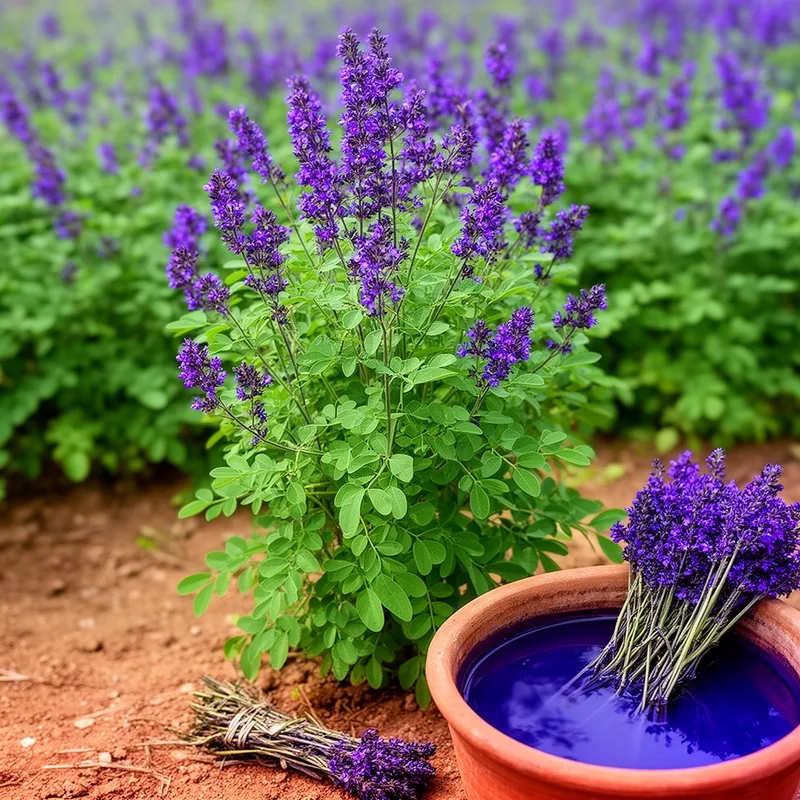
indigo
 1
8.0
1
8.0

- noun
- /ˈɪndɪɡoʊ/
- In traditional textiles, indigo is often used to create bold patterns and vibrant colors.
Examples
-
The Indigo Buntings and Lesser Yellowlegs were photographed at Huntley Meadows Park.
Blog text (21) -
The male Indigo Bunting in the above images was molting and therefore not fully feathered in bright blue feathers.
Blog text (21) -
Among these are indigo buntings.
Academic text (1995) -
The Indigo Bunting is such a beautiful bird, and I have never seen one here on Long Island.
Blog text (21) -
Indigo Buntings are common, brilliantly colored birds found all over the eastern U.S.
Blog text (21) -
Indigo buntings steer north by looking for star patterns near the north celestial pole.
Academic text (1995) -
The dye used for blue jeans is derived from the indigo plant, which has been cultivated for centuries.
-
Artists love to use indigo as it provides a rich, deep hue on canvas or fabric.
Synonyms

A small bush with many leaves and purple flowers grown for blue dye

A small plant from Asia grown to make blue dye for cloth
Compounds

A North American plant that lives for many years with spikes of blue flowers and gray-green leaves

A large nonvenomous snake with shiny blue-black skin that lives in the southeastern United States
- Specialized
A North American shrub with blue or purple flowers often grown in gardens
A North American plant with blue-violet star-shaped flowers that lives for many years


A small North American songbird with bright blue feathers on the male during breeding season


- US
A large dark blue nonvenomous snake in southern North America and Mexico that often enters burrows


- US
A North American plant with blue, white, or yellow flowers that grows in prairies and open woods
Surface Forms
Etymology
Indigo the plant was the source of the famous blue dye, and its name comes from indicum meaning 'from India'. So the plant is called indigo because it gives the deep blue color we call indigo.