
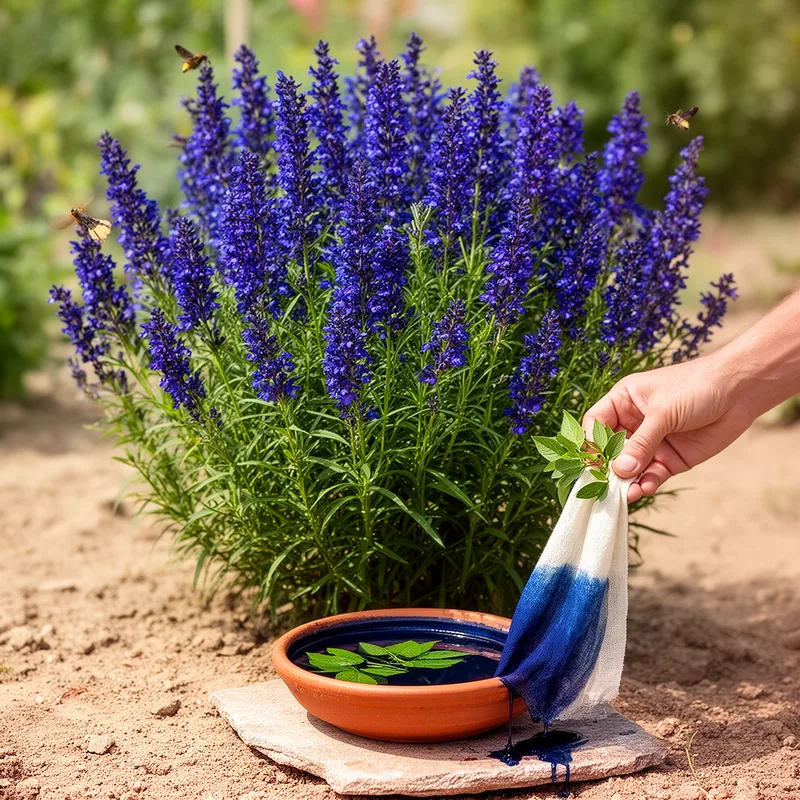
bastard indigo
- noun
- /ˈbæstərd ˈɪndɪɡoʊ/
- Gardeners appreciate the resilience of bastard indigo in dry and sunny climates.
Examples
-
The bastard indigo blooms beautifully in the summer.
-
The leaves of the bastard indigo are sometimes used locally for dyeing fabrics.
-
Researchers studied the medicinal properties of extracts from the bastard indigo.
-
Many gardeners love the bastard indigo for its vibrant colors.
-
Gardeners appreciate the resilience of bastard indigo in dry and sunny climates.
-
The leaves of the bastard indigo are sometimes used locally for dyeing fabrics.
-
Many gardeners love the bastard indigo for its vibrant colors.
Synonyms
A North American shrub with blue or purple flowers often grown in gardens

A North American plant with blue, white, or yellow flowers that grows in prairies and open woods
Surface Forms
Morphology
The phrase is a straightforward composition: 'bastard' here functions like 'false/spurious' or hybrid, and 'indigo' names the plant. A learner who knows those constituent meanings can infer it denotes a plant resembling true indigo (a common cross-linguistic naming pattern for non‑true species).
Etymology
Bastard indigo comes from people using bastard to mean 'not the real', so they called this shrub a 'false' indigo because it looks like the true indigo plant but is different. So the name helps you remember it is like indigo in color or use, but not the real indigo plant.

