

false indigo
- noun
- /fɔls ˈɪndɪgoʊ/
- Specialized
- Many gardeners love false indigo for its vibrant color.
- blue false indigo
Examples
-
The garden was filled with beautiful false indigo plants.
-
The garden was bordered with false indigo that bloomed every spring.
-
Bees are often attracted to the striking clusters of false indigo in the summer.
-
We planted false indigo for its vibrant purple flowers and hardiness.
-
The garden features beautiful plants like the false indigo, which has striking blue flowers.
-
In spring, the false indigo adds a splash of purple to the landscape with its vibrant blossoms.
-
Planting false indigo can attract pollinators, making it a popular choice for ornamental gardens.
Synonyms

A plant that lives many years with blue, pea-like flowers often grown in gardens
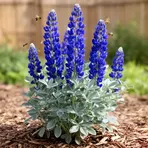
A North American plant that lives for many years with spikes of blue flowers and gray-green leaves

A North American plant with blue, white, or yellow flowers that grows in prairies and open woods

A shrub with colorful or scented flowers like indigo plants used for dyeing
Surface Forms
Morphology
false + indigo
The noun follows the common 'false + X' pattern where 'false' signals an imitation or lookalike; a learner who knows 'false' and 'indigo' (the indigo plant or color) can infer this names a plant that resembles but is not the true indigo. Botanical naming using 'false' to mark a lookalike is cross-linguistically common, so the meaning is compositionally derivable from the parts.
Etymology
False indigo was named because early settlers saw its purple flowers and thought it looked like the true indigo plant used for 'indigo dye'. So they called it false indigo, meaning a shrub that looks like indigo but is 'not real indigo'.

