

hydrophobicity


 1
8.6
1
8.6
- noun
- /ˌhaɪdrəˈfoʊbɪsɪti/
- Specialized
- The relationship between unsaturated hydraulic conductivity, which is known to be impacted by soil hydrophobicity, and groundwater recharge rates was also evaluated using regression analysis.
- soil hydrophobicity
- surface hydrophobicity
- severity of hydrophobicity
Examples
-
Scientists are studying how hydrophobicity affects plant growth in arid regions.
-
The hydrophobicity of the new coating prevents water from wetting its surface.
-
An assessment of the combined effect of soil moisture and organic carbon content on hydrophobicity was performed.
Academic text (2017) -
Experimental Methods to Assess Soil Hydrophobicity
Academic text (2017) -
Statistical Analyses of Soil Hydrophobicity Measurements.
Academic text (2017) -
The recharge results pertinent to this soil hydrophobicity study are presented here.
Academic text (2017) -
However, studies specifically designed to isolate the impact of hydrophobicity on the water budget, particularly recharge, would provide valuable information.
Academic text (2017) -
However, a detailed study specifically designed to tackle the issue of spatial variability of hydrophobicity in pine forest settings will provide valuable information.
Academic text (2017) -
The potential for soil hydrophobicity can be observed in the WDPT test on the oven-dried samples.
Academic text (2017) -
Several species of pines, including ponderosa pine, are known to cause soil hydrophobicity.
Academic text (2017)
Synonyms

The quality of keeping water or insects away from something

A property of a material that keeps water and insects away
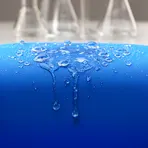
A property of a surface that does not soak up liquids
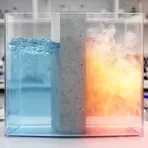
The quality of not letting water or air pass through
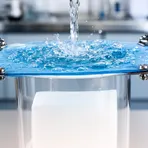
The quality of not letting water pass through something

How well something keeps water out, for example a jacket or tent
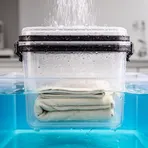
How well something stops water from getting in or out

Does not dissolve in water or other liquids
Antonyms
How Water-Repellent

Surface Forms
Morphology
hydrophobicity = hydrophobic (semi-transparent) = hydro + phob + ic + ity
The noun is a regular -ity derivation from the technical adjective 'hydrophobic', but the scientific combining forms make it less obvious to an average learner.
Etymology
Hydrophobicity comes from hydro- 'water' and -phobic 'fear', as in phobia. So it literally suggests a 'fear of water' and today it describes a surface or material that 'avoids' or 'repels' water.