

watertightness
- noun
- /ˈwɔːtərˌtaɪtnəs/
- The watertightness of the new sealant ensures that no water will leak into the basement.
Examples
-
Engineers tested the watertightness of the dock's structure before allowing boats to enter.
-
The entire structure was plastered over, which thereby provided a certain degree of watertightness.
Academic text (1995) -
For a successful boat design, watertightness is crucial to prevent unwanted water intake.
Synonyms

 1
8.7
1
8.7

A state of not allowing water, light, or ideas to pass through

How well something keeps water out, for example a jacket or tent
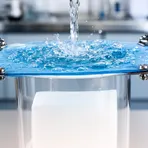
The quality of not letting water pass through something

The quality of not letting water or air pass through

The ability to keep rain, wind, or snow from entering and damaging something
How Watertight

Surface Forms
Morphology
watertightness = watertight (transparent) = water + tight + ness
The noun is a straightforward nominalization of the adjective 'watertight' with '-ness', and 'watertight' itself is a transparent compound of 'water' + 'tight'.
Etymology
Watertightness is made from water, tight, and the ending -ness. Tight means 'closed or secure' and -ness shows a state, so watertightness is the 'state of being tight against water' and explains how well something keeps water out.