
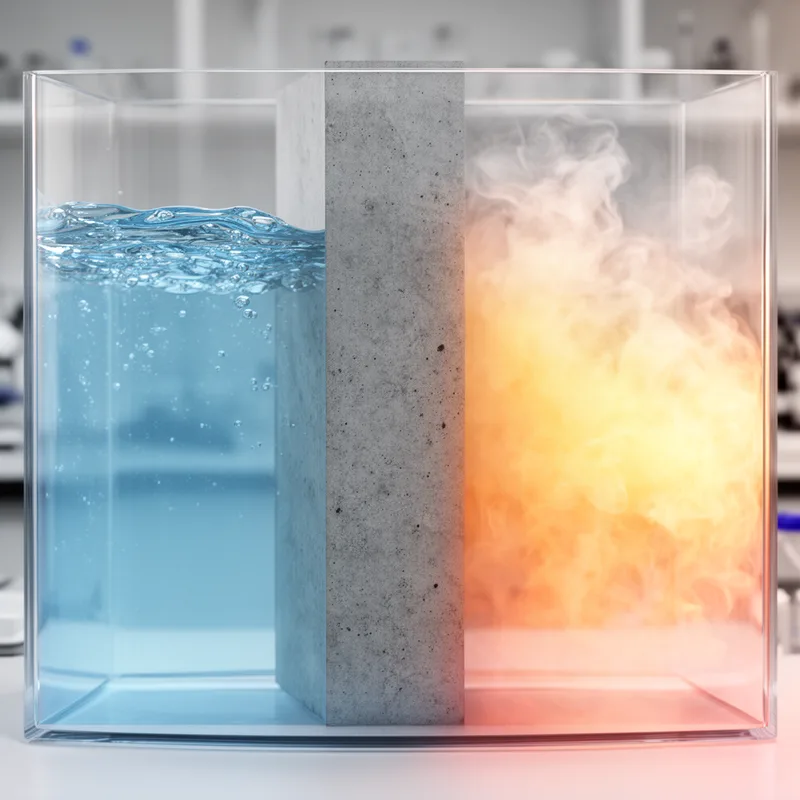
impermeability
- noun
- /ɪmˌpɜrmiˈæləti/
- Specialized
- How can one be confident of the continued impermeability of a rock layer if it is subjected to massive differential subsidence?
- autonomy and impermeability
- impermeability of states
Examples
-
State autonomy and impermeability protect the state's right to pursue its own national interest, maintain its own values, and determine the condition of its own society and the life and destiny of its inhabitants.
Academic text (1990) -
Indeed, the impermeability of borders for laborers accounts for much of what we call "globalization."
Academic text (2008) -
The impermeability and constant temperature of the tufa have kept the colors alive over the centuries.
Academic text (2001) -
External scrutiny and other "interventions" to assure the proper implementation of such programs are resisted in the name of state autonomy and impermeability.
Academic text (1990) -
A computer security expert, Schneier has recanted his faith in the impermeability of cryptographic algorithms.
Academic text (2005) -
Moreover, state values -- the independence and autonomy of the state, the inviolability of its territory, and the impermeability of its society -- and cooperative welfare programs that benefit the state might also benefit its people.
Academic text (1990) -
Because state values of autonomy and impermeability are deeply embedded, even states that have adhered to human rights law have resisted external monitoring of their compliance and have been reluctant to monitor others.
Academic text (1990) -
The autonomy and impermeability of states are protected and promoted by law prohibiting the use or threat of force against the state's political independence and territorial integrity, and by norms against intervention generally.
Academic text (1990) -
An international system of states is likely to be with us for a long time, and state values—independence, autonomy, impermeability—are likely to remain dominant values of the system.
Academic text (1990) -
One of graphene's most remarkable properties is its impermeability to gases and liquids.
Synonyms

 1
8.7
1
8.7

A state of not allowing water, light, or ideas to pass through


 1
4.6
1
4.6
The state of not letting air move in or out
 1
9.9
1
9.9
Being impossible to go through, like thick walls or heavy fog
The quality of not letting water pass through something

How well something stops water from getting in or out

A quality of being impossible to get through or understand
Antonyms

How Impermeable
1
4.6

- Specialized
- Specialized
3
7.4
- Specialized
1
7.7
Surface Forms
Morphology
impermeability = impermeable (transparent) = im + permeable + ity
The noun is transparently formed from the adjective 'impermeable' by adding the suffix '-ity'.
Etymology
Impermeability comes from the prefix im- meaning 'not' and permeable, from permeate which means 'to pass through'. So impermeability is the quality of not letting liquids or gases pass through, like a raincoat that keeps water out.