
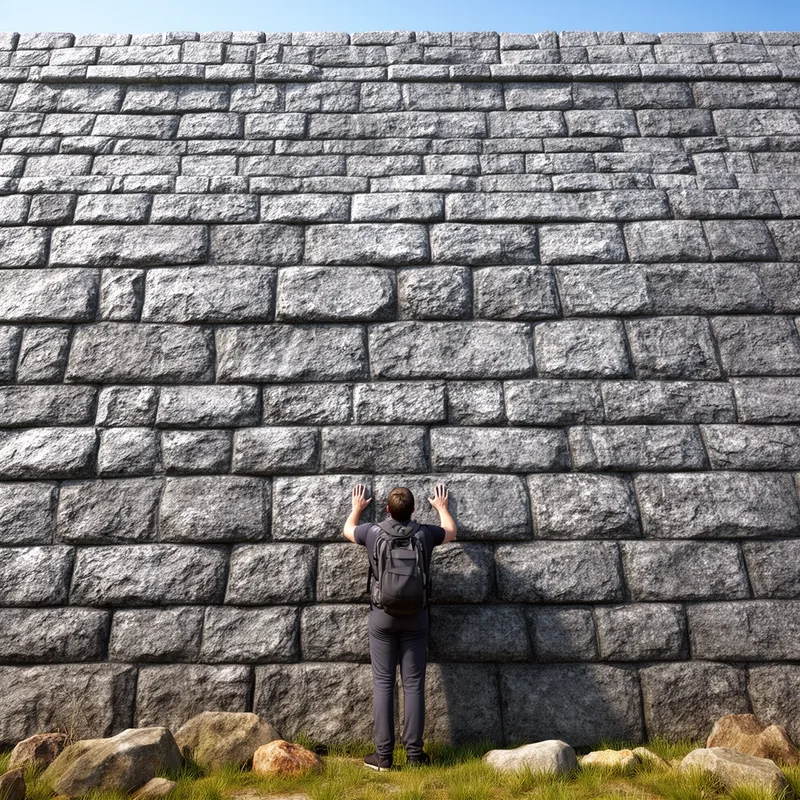
impenetrability


 1
9.9
1
9.9
- noun
- /ɪmˌpɛnəˈtræbɪlɪti/
- Notice the way the words never fuse in Ruscha's abstract skies: there is a complete impenetrability between the mock landscape backgrounds and the sticky letters that press against it.
Examples
-
The air of mystery and impenetrability
Academic text (2010) -
There remains much exasperation over the Japanese market's seeming impenetrability to many imports and most foreign direct investment.
Academic text (1990) -
A forest of mystical impenetrability covered Europe from the Pyrenees to the Urals again.
Fiction book (1998) -
Their relationship with glass surfaces and their physical impenetrability fits Mies's residential architecture to the description of Michel Carrouges's "Bachelor Machine," a mechanism designed for philosophical celibacy that renounces woman and the flesh, or at least women in the flesh.
Fiction book (1992) -
The impenetrability of the dense fog made it difficult for the drivers to see the road ahead.
-
Geologists studied the impenetrability of the rock layers to understand the region's geological history.
-
The author's complicated writing style contributed to the impenetrability of her novels, making them challenging for readers.
Synonyms
 2
8.3
2
8.3
A state when people cannot reach or get something easily
 1
9.9
1
9.9
A state where something is very hard to understand
 1
9.9
1
9.9
A quality that you cannot understand or know the reasons for
 1
8.7
1
8.7
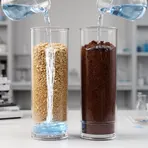
A state of not allowing water, light, or ideas to pass through
 1
9.8
1
9.8
A state when something cannot be explained or understood
 1
8.3
1
8.3
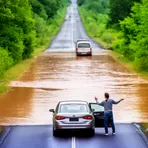
A situation where a road or path cannot be crossed
 1
9.5
1
9.5
A state of being very hard to notice

A quality of being impossible to get through or understand

You cannot easily understand or picture it in your mind
The quality of not letting water or air pass through
The quality of not letting water pass through something

A state in which something is impossible to see or tell apart
Antonyms

How Impenetrable

Surface Forms
Morphology
impenetrability = impenetrable (transparent) = im + penetrate + able + ity
Formed by adding the noun-forming suffix '-ity' to the clearly negative adjective 'impenetrable', so the step is directly derivable.
Etymology
Impenetrability breaks into the parts im- ('not'), penetrate ('to enter'), and -ability ('can be done'). So, impenetrability is the quality of being 'not able to be entered or passed through', like thick fog or a very strong wall.