
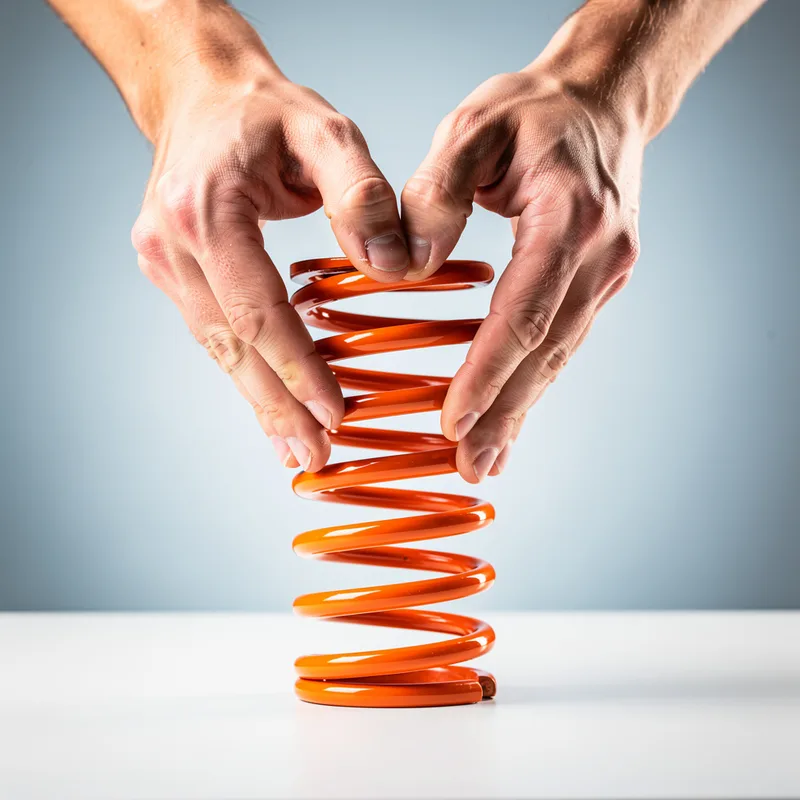
to hold down
 22
3.2
22
3.2

- phrasal verb
- /hoʊld daʊn/
- "Anything we can do to produce more while holding down costs will benefit farmers."
- hold down prices
- hold down costs
Loading YouTube…
Watch on YouTubeI fought for the ones that were enslaved, held down by dictators, starved.
- I fought for the ones that were enslaved, held down by dictators, starved.
- I had a lot of bruises because I was held down so hard.
- And I can feel the urge, but you're holding it down.
Examples
-
We have to find a way to hold down the inflation rate and reduce the deficit.
Fiction book (2000) -
To hold down fees, some agencies will permit you to inspect material and select portions for copying.
Academic text (1996) -
Yeah, you do just have to hold it down for a few seconds.
-
The second thing that we could do is hold down the sides of it.
-
OK, so hold down volume up and press the power button.
-
Like most writers, I have to hold down a day job.
Blog text (23) -
The curriculum also includes courses on seeking and holding down a job and on environmental literacy.
Blog text (21) -
As it stands, Medicare does a good job of holding down costs.
Blog text (26) -
I placed loose red bricks around the periphery, on the grass, to hold the tarp down.
Fiction book (1996) -
To keep expenses manageable, the company must hold down costs without sacrificing quality.
Synonyms
 ∞
2.1
∞
2.1
To control how much or how often something happens
 388
3.5
388
3.5
To keep something dangerous from spreading or getting worse
 104
3.7
104
3.7
Stop something from growing or spreading
 86
4.6
86
4.6
Hold a person or thing so it cannot move freely
 64
5.6
64
5.6
To limit what someone can do or how they can act
 53
4.6
53
4.6
To keep someone or something under control, for example by limiting spending
 49
5.3
49
5.3
To hold back a feeling or reaction so it does not show
 39
3.6
39
3.6
To stop people or groups from becoming stronger
 18
4.2
18
4.2
To use strict rules and punishments to stop bad or illegal actions
 17
2.9
17
2.9
Keep something or someone in place and still
 13
5.3
13
5.3
Take strong action to stop something bad or illegal
 9
6.4
9
6.4
To stop something from continuing or becoming known
 4
5.1
4
5.1
To keep prices or spending at the same level
Antonyms


How Restricted

Surface Forms
Morphology
hold + down
There is a clear link between 'hold' (to keep or retain) and the particle 'down' contributing a sense of maintaining or keeping something in place, so a learner who knows the constituents could infer a general meaning of keeping or retaining. However, the specific collocation 'hold down a job/position' (maintain employment over time, often under difficulty) is a conventionalized usage of the phrasal verb and not fully predictable from the parts alone, making it only partially transparent to B1 learners.
Etymology
Hold down comes from the simple image of using your hands to hold something down so it cannot rise or move. That's why it means 'to stop something or keep it within limits'.