
heavy
 21
7.5
21
7.5

- adjective
- /ˈhɛvi/
- Specialized
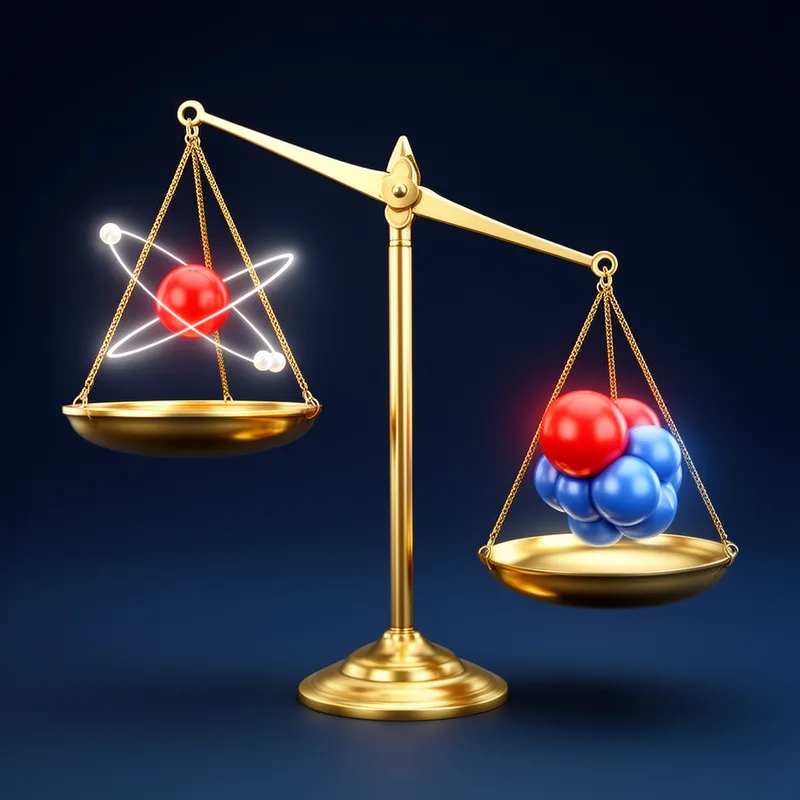
- Deuterium, known as heavy hydrogen, is an isotope that contains one neutron in addition to its proton.
- heavy isotopes
- heavy metals
- heavy elements
Loading YouTube…
Watch on YouTubeSo what's coming out of, you know, colliding heavy ions together?
- So what's coming out of, you know, colliding heavy ions together?
- But the ultra bitter dark chocolate, high polyphenol, no heavy metals, so on and so forth.
- But you may remember from last time that at a given temperature, heavier molecules move more slowly.
- So the the more energy distilled into a single atom, the the heavier it is on the periodic chart.
- That creates A heavier nucleus with slightly less mass.
Examples
-
In nuclear physics, a substance with a high atomic weight is classified as heavy, which influences its behavior in reactions.
-
Uranium is considered a heavy element due to its atomic mass being much greater than that of most other elements.
-
"And right now one is burning heavy hydrogen to get to you.
Fiction book (1998) -
He seemed more focused on heavy water.
-
By 1935, the facility was shipping 99% pure heavy water to countries throughout Europe for scientific experiments.
Academic text (2012) -
In 1934, Urey was awarded the Nobel Prize in Chemistry "for his discovery of heavy hydrogen."
Academic text (2012) -
Kochian's cost-effective "green" technology uses plants to "vacuum" heavy metals from the soil through their roots.
Academic text (2000)
Idioms



Compounds




- Specialized
17
3.4
Large machines like bulldozers or cranes used to move dirt and heavy materials

- Specialized
15
5.2
A large gun like artillery or a heavy machine gun that soldiers move to support troops in war









- Specialized
5
7.8
A kind of water with heavier hydrogen atoms used in some nuclear reactors
 5
3.1
5
3.1
A type of loud, powerful rock with strong guitar sounds, fast drums, and angry lyrics














- Specialized
A syllable with a long vowel, two vowel sounds together, or a final consonant that sounds stronger

- Specialized
A large underwater weapon launched from submarines with a very powerful warhead to sink big ships

- Specialized
A tiny piece of matter as heavy as or heavier than a proton that feels the strong force



How Heavy

Surface Forms
Etymology
Heavy comes from Old English hefig, which meant 'weighty' or 'weighing a lot'. Scientists use 'heavy' the same way to mean an atom or molecule that has more weight than usual.