

empire
 226
3.5
226
3.5

- noun
- /ˈɛm.paɪər/
- At its peak, the empire controlled territories across three continents.
- colonial empire
- British empire
- Ottoman empire
Loading YouTube…
Watch on YouTubeSo I just know every empire of all time has crumbled.
- So I just know every empire of all time has crumbled.
- influence than than what the Roman Empire left on civilization.
- To not see the decline of their empire is stunning.
- The closest heir to the Eastern Roman Empire is the Russian Empire.
- So the Russian Empire is defeated along with France.
- So yeah, that's a big Roman Empire favorite movie this year.
- Could you crash his empire and not stop unless he quits?
- This is the oldest rule of every empire is divide and rule.
- The Roman Empire, the Greek Empire, Chinese were the earliest.
Examples
-
But though Rome may have fallen, the empire endures.
-
The Ottomans absorbed the town into their empire in the eighteenth century.
Academic text (2011) -
A people whose empire once covered one quarter of the surface of the earth.
-
To not see the decline of their empire is stunning.
-
What now happens in this room will echo across an empire.
-
Meanwhile, I shall strive to protect our empire, as my father would have demanded.
-
The last hope of reviving the Swedish Empire died along with Charles.
-
At the height of its empire, the United States sometimes sees itself as invincible, too.
Academic text (2008) -
After all, revolts and wars across the empire were quite common and distracting.
-
It was part of the Austro Hungarian Empire for many years.
Synonyms
 2
9.9
2
9.9
Lands and people under the control of an emperor
 1
9.9
1
9.9
Rule by an emperor over many lands

A land area controlled by a ruler or state
Antonyms
 608
3.0
608
3.0
Freedom from control by others, for example when a country is free or a person supports themselves
Compounds
 27
3.9
27
3.9
A large ancient state based in Rome that controlled much of Europe, North Africa, and Western Asia
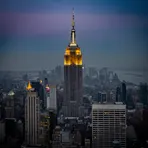 21
2.1
21
2.1
A very tall building in New York City with a famous observation deck since 1931
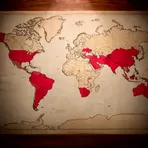 20
3.8
20
3.8
Great Britain once ruled a large empire that included colonies like India, Canada, and Australia
 16
5.2
16
5.2
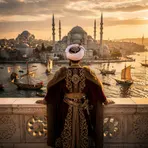
A large Muslim empire from the late 1200s to World War I that ruled parts of Europe, Asia, and Africa

 3
5.3
3
5.3
A large ancient empire in southwest Asia started by Cyrus the Great and later conquered by Alexander the Great
 2
8.4
2
8.4
A group of many states in central Europe that an emperor ruled from 962 to 1806
 1
5.8
1
5.8
A large organization that has influence in many countries, often in business or politics
 1
5.1
1
5.1
A large group of companies owned by one person or company that make newspapers, magazines, and books
 1
6.3
1
6.3
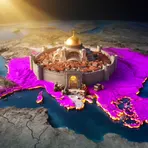
The eastern part of the Roman Empire centered on Constantinople that lasted from about 395 to 1453


 1
6.9
1
6.9
The eastern part of the Roman Empire that continued after 395 with its capital at Constantinople

An ancient kingdom along the Nile in northeast Africa ruled by kings called pharaohs

- Archaic
A day on 24 May to celebrate Queen Victoria's birthday and the British Empire

A nickname for the U.S. state of Georgia for its economic and cultural importance in the South
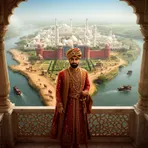

A large empire started by Genghis Khan in the 1200s that stretched across much of Asia into Europe


How Powerful

Surface Forms
Etymology
Empire comes from the Latin word imperium, which means 'command' or 'power', and is related to emperor, a ruler who commands many lands. So an empire is a group of countries or regions under one ruler's control.