
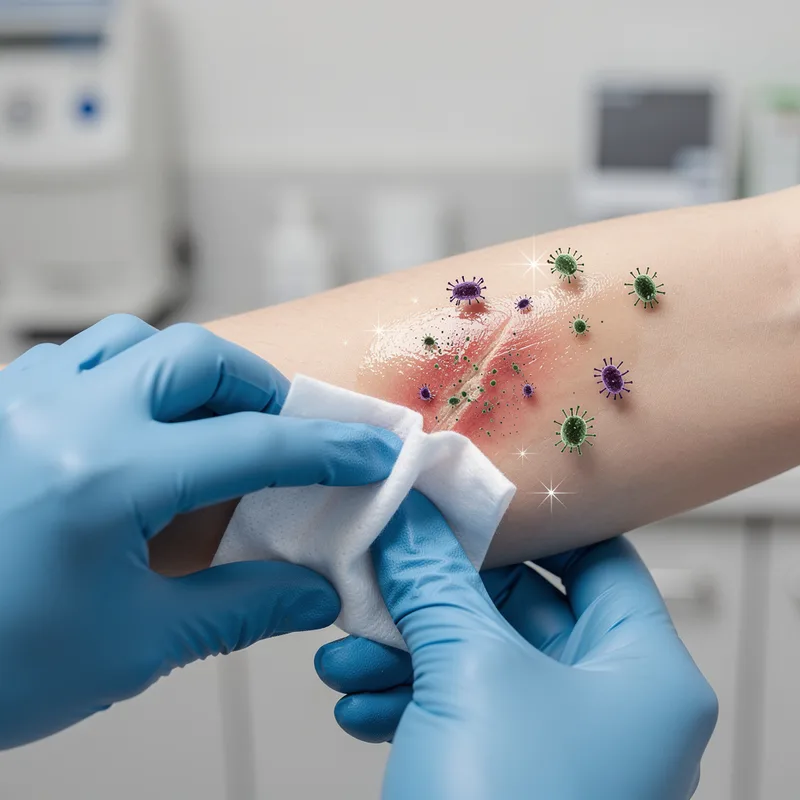
disinfectant
 1
3.5
1
3.5

- adjective
- /ˌdɪsɪnˈfɛktənt/
- After water removal, all affected materials should be decontaminated by spraying with a disinfectant solution.
Loading YouTube…
Watch on YouTubeNo, if I can get a keychain, disinfectant wipes, a candle, a men's body fragrance and a sack of s'mores all in one crevice aisle before I hand them my card.
- No, if I can get a keychain, disinfectant wipes, a candle, a men's body fragrance and a sack of s'mores all in one crevice aisle before I hand them my card.
Examples
-
This is disinfectant.
-
Clean the object first and then apply the disinfectant solution.
Blog text (25) -
You must use this disinfectant soap.
-
"Right now, she needs a disinfectant sponge bath before the ambulance gets here.
Fiction book (1994) -
Add lavender oil to your tea tree cleaning solution to increase the disinfectant power; there is a synergistic effect.
Blog text (10) -
Residual organic matter in cracks and crevices can be removed by pressure washing with a disinfectant solution.
Academic text (1994) -
The THM rule has made many utilities switch from chlorination to chloramination as a disinfectant byproduct mitigation strategy.
Academic text (2003) -
This addition changes any free chlorine to chloramines. (Chloramines possess some disinfectant properties, but are weak compared to free chlorine itself.)
Academic text (1998) -
Ensure the surfaces are clean before applying the disinfectant solution to kill germs.
-
When performing surgery, medical staff use a disinfectant to maintain a sterile environment.
Synonyms
 12
4.9
12
4.9
Free from germs and able to kill them

Able to kill germs or stop them from growing

Able to kill germs and stop their growth

Able to kill bacteria or stop their growth
How Antimicrobial

Surface Forms
Morphology
Etymology
Disinfectant combines dis- 'not' and infect 'to cause disease', the same root you see in infection. That's why, used as an adjective, disinfectant describes something that can kill germs or stop infection.