

antimicrobic
- adjective
- /ˌæntiˈmaɪkroʊbɪk/
- Specialized
- Some essential oils have notable antimicrobic properties that can help prevent infections.
Examples
-
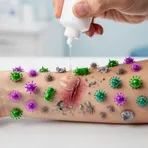
The doctor prescribed an antimicrobic ointment to treat the infection.
-
The hospital uses antimicrobic solutions to clean the surgical instruments.
-
Some essential oils have notable antimicrobic properties.
-
This laboratory tests the antimicrobic activity of new pharmaceutical compounds.
-
This cream is antimicrobic.
-
The doctor prescribed an antimicrobic ointment to treat the infection.
-
The hospital uses antimicrobic solutions to ensure the cleanliness of surgical instruments.
Synonyms
 3
5.1

That kills or stops the growth of germs that cause disease


 1
6.8
Able to kill germs or stop them from growing
 1
7.7
Able to kill germs like bacteria and viruses
How Antimicrobic
- Specialized
1
7.2

- Specialized
1
7.7
- Specialized
83
3.4
Surface Forms
Morphology
Etymology
Antimicrobic combines anti- 'against' and microbe 'tiny life', like the 'micro' in microscope, so when something is called antimicrobic it can kill or stop the growth of germs.