

antiseptic
 12
4.9
12
4.9

- adjective
- /ˌæntiˈsɛptɪk/
- Specialized
- She sanitized the surfaces with an antiseptic solution to eliminate harmful germs.
Loading YouTube…
Watch on YouTubeIt's light, has antiseptic properties, absorbs many times its own weight in fluids, and grows throughout Britain.
- It's light, has antiseptic properties, absorbs many times its own weight in fluids, and grows throughout Britain.
Examples
-
The examining room smelled like antiseptic, and I was cold as I sat on the crackly paper of the examining table.
Fiction book (1997) -
Better get some antiseptic on that before it festers.
-
I think I need some antiseptic or something.
-
I was looking for some antiseptic.
-
Hey, Em , would you get the antiseptic cream out of the drawer over there?
-
Would you bring me some antiseptic ointment, please?
Fiction book (1992) -
All we had at our Mission was a little antiseptic fluid and some bandages.
-
We still use it as an antiseptic agent in an herbal skin ointment.
-
In order to guard against gum disease and plaque bacteria, a special kind of antiseptic mouthwash is used.
Blog text (16) -
As ticks may carry bacteria as well as viruses, the bite area should be thoroughly washed and antiseptic applied.
Academic text (2011)
Synonyms
 ∞
1.0
∞
1.0
Free from dirt or harmful things
 37
4.4
37
4.4
Completely free from germs
 24
2.8
24
2.8
Clean and free from dirt or germs that can cause disease
 12
3.8
12
3.8
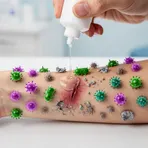
Killing bacteria or stopping their growth
 3
5.1
3
5.1
That kills or stops the growth of germs that cause disease
 1
6.7
1
6.7
Free from harmful germs to prevent infection


 1
3.9
1
3.9
Made clean so it is free from germs

Able to kill germs and stop their growth

Helping to clean or kill harmful germs

Able to kill germs like bacteria and viruses

Able to kill germs or stop them from growing

Able to kill bacteria or stop their growth
Antonyms


How Antiseptic

Surface Forms
Morphology
Etymology
Antiseptic is formed from anti- 'against' and septic 'rot' or 'infection'. So if a place or tool is antiseptic, it is kept very clean and free from germs.