
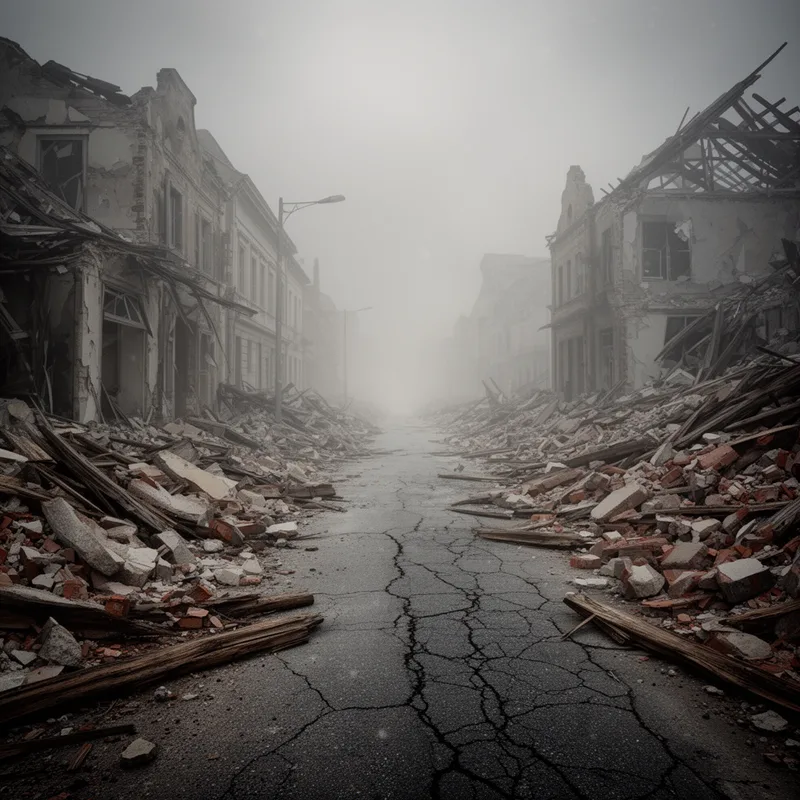
desolation
 11
7.7
11
7.7

- noun
- /ˌdɛsəˈleɪʃən/
- When I got out at Twenty-first and Prairie, I was shivering from the desolation of the scene.
Examples
-
His joy at being out in the open again could not be marred by the desolation around him.
Fiction book (1992) -
A scream that carried across the desolation of the peaceful night desert and seemed to go on until morning.
Fiction book (2000) -
This whole land is a desolation!
-
But we all saw desolation give way to joy, death to life.
-
As of three days ago the area of desolation has increased 70 percent.
-
Because here in hundreds of meters You will find nothing but desolation and loneliness.
-
From a distance, though, it still looks like a spot of sanity in all that desolation.
Fiction book (1996) -
The day of the Lord comes, cruel with wrath and fierce anger to make the earth a desolation.
-
Once inside, these former workers faced the utter desolation that a year of abandonment and pillage had left.
Academic text (2008) -
The once thriving village now lay in desolation after the fire destroyed everything.
Synonyms
 849
3.0
849
3.0
Severe damage that makes something no longer exist or cannot be fixed
 90
4.8
90
4.8
Great destruction that leaves places badly damaged, for example after a war or storm
 6
7.9
6
7.9
Complete destruction that leaves nothing behind
 3
6.3
3
6.3
A cold, empty feeling that makes a place or situation seem sad
 1
4.8
1
4.8
Damage across a large area that destroys buildings and homes
 1
5.6
1
5.6
An empty landscape with few plants or buildings


 1
5.1
1
5.1
A plain, empty look with no decorations
 1
8.1
1
8.1
A situation when nothing useful can be produced

A state when something is very broken and falling apart

A state of complete destruction that leaves a place ruined
Land with no plants or people, appearing empty and lifeless

A feeling of being very lonely and empty after loss
Antonyms


How Ruined

Surface Forms
Morphology
Etymology
Desolation comes from the Latin parts de- and solus, where solus means 'alone' and the same root appears in English words like solo and solitude. Imagine a town left 'completely alone' with empty streets and broken buildings, and you can see why desolation means a place of emptiness and ruin.