

vastation
- noun
- /væˈsteɪʃən/
- Archaic
- Environmental damage turned the once-lush forest into a barren vastation.
Examples
-
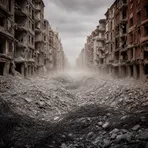
War left the countryside in a state of utter vastation, with nothing but ruins remaining.
-
The abandoned town was a picture of vastation after years of neglect and decay.
-
The vastation of the ancient city left it unrecognizable.
-
After the storm, the vastation was evident everywhere.
-
The city's vastation after the hurricane left behind only rubble and despair.
-
The archaeologists studied the vastation of the ancient ruins, trying to understand the events that led to their destruction.
-
Many people were shocked by the vastation inflicted on the landscape by the wildfire.
Synonyms

 849
3.0
849
3.0

Severe damage that makes something no longer exist or cannot be fixed
 110
4.3
110
4.3
Great damage to a wide area often caused by war or a big disaster
 90
4.8
90
4.8
Great destruction that leaves places badly damaged, for example after a war or storm
 14
8.8
14
8.8
An action that causes great damage to places and people
 11
7.7
11
7.7
An area left empty and ruined after a disaster
 6
7.9
6
7.9
Complete destruction that leaves nothing behind
 6
7.6
6
7.6
A complete destruction or great loss that makes something worthless
 4
9.8
4
9.8
Damage and stealing caused by a violent attack
 3
3.8
3
3.8
Serious harm that affects a large area or many things
 1
4.8
1
4.8
Damage across a large area that destroys buildings and homes

The act of destroying something so it is completely ruined

A state when something is very broken and falling apart
Antonyms


Surface Forms
Morphology
Etymology
Vastation comes from the Latin root vastus, meaning 'empty', and the verb vastare, meaning 'to lay waste'. It is like the familiar word devastation, so vastation can mean complete ruin or land left empty and broken.