
denarius
- noun
- /dɪˈnɛrɪəs/
- Archaic
- In medieval records, prices were often listed in denarius to standardize accounting.
Examples
-
The merchant paid five denarii for the rare spice.
-
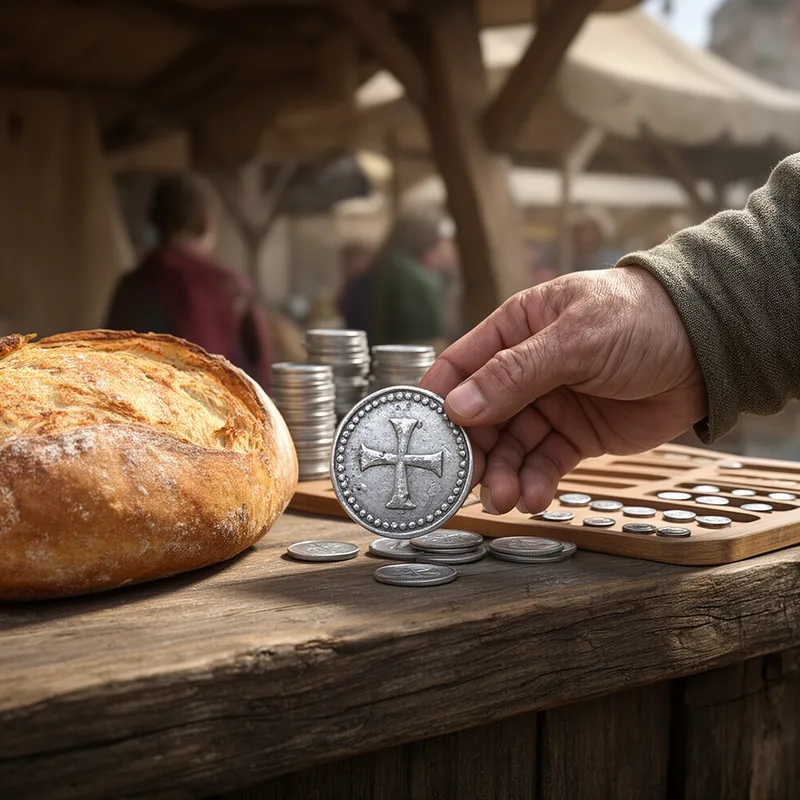
The merchant accepted a single denarius for a loaf of bread at the market.
-
A silver denarius was considered valuable in trade across several European regions.
-
He saved a few denarii for his travels next year.
-
The merchant accepted a single denarius for a loaf of bread at the market.
-
In medieval records, prices were often listed in denarius to standardize accounting.
-
A silver denarius was considered valuable in trade across several European regions.
Synonyms


 1
9.9
1
9.9
A gold coin used in the Byzantine Empire and in medieval Europe
 1
9.9
1
9.9
A small gold coin used as money in ancient Rome

An old European coin used in the Middle Ages
A unit used in old records to show money value

A coin used in ancient Rome to buy things

An old Greek coin used to buy things
Surface Forms
Etymology
Denarius kept its Roman name in medieval Europe and became a common unit for prices and accounts, so merchants and bookkeepers used denarius to list the cost of goods.