

denier
- noun
- /dɪˈnɪr/
- Archaic
- In 1481, the rate was established at two Flemish deniers (or one stiver) per foot for the first two years, and four deniers (two stivers) per foot beginning with the third year and for the next thirty-one years of the rental contract.
Examples
-
In medieval France, a merchant might pay a craftsman a fee of ten deniers for a handmade item.
-
A traveler in medieval Europe often had to exchange their currency for deniers to make purchases more easily.
-
In 1481, the rate was established at two Flemish deniers (or one stiver) per foot for the first two years, and four deniers (two stivers) per foot beginning with the third year and for the next thirty-one years of the rental contract.
Academic text (1990) -
During the Middle Ages in Italy, one could find various items priced at twenty deniers or less in local markets.
Synonyms
 14
9.9
14
9.9

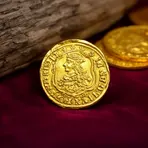
A gold coin used in Europe long ago
 1
9.9
1
9.9
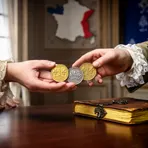
An old French coin or a very small amount of money
 1
9.9
1
9.9
A unit of French money used before the franc


 1
9.9
1
9.9
A gold coin used in the Byzantine Empire and in medieval Europe
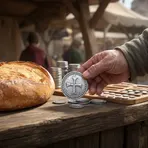
A medieval European coin used to show prices and keep accounts
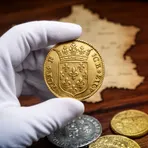
A former French gold or silver coin used from the Middle Ages to the 1700s

A gold coin from the Byzantine Empire used in Europe in the Middle Ages
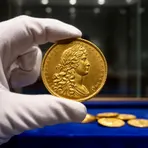
A former French gold coin that has the king's picture
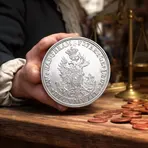
A large silver coin used in Europe between the 1500s and 1800s
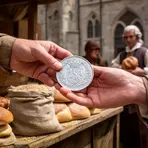
A large silver coin used in Europe long ago
Surface Forms
Etymology
Denier as a medieval coin takes its name from Latin denarius, the Roman coin, and kept that name in France as a small silver 'coin' in the Middle Ages. So a denier was literally a small piece of money used in everyday trade.