
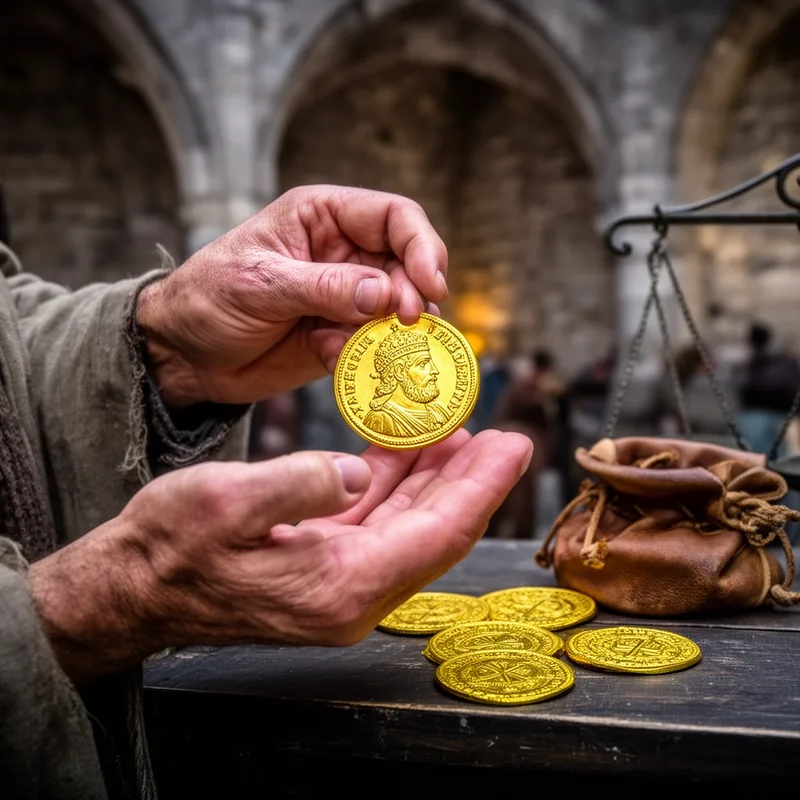
solidus


 1
9.9
1
9.9
- noun
- /ˈsɒlɪdəs/
- Archaic
- Collectors value the ancient solidus due to its historical significance and craftsmanship.
Examples
-
The Byzantine gold coin, the hyperpyron (sometimes called the bezant), was a direct successor of the late Roman gold coin, the aureus or solidus.
Academic text (1990) -
In Constantinople, the solidus lasted for 700 years.
-
A reciprocity is established between the emperor and his representation on the gold solidus (Fig. 11).
Academic text (2006) -
An archaizing diadem, depicted on Byzantine coinage as a row of large pellets between two rows of dots, was revived on the portrait solidus of Leo VI.
Academic text (1997) -
The solid gold solidus was widely used in trade across Europe during the Middle Ages.
-
In the Byzantine Empire, a solidus was often used to pay soldiers and officials.
Synonyms

A gold coin from the Byzantine Empire that people used widely in the Middle Ages

A gold coin from the Byzantine Empire used in Europe in the Middle Ages

A gold coin from the Byzantine Empire used in medieval Europe
Surface Forms
Etymology
Solidus comes from a Latin word meaning 'solid' or 'firm' and was the name of a gold coin used in the Roman and Byzantine empires. So a solidus today means that old, steady gold coin.