
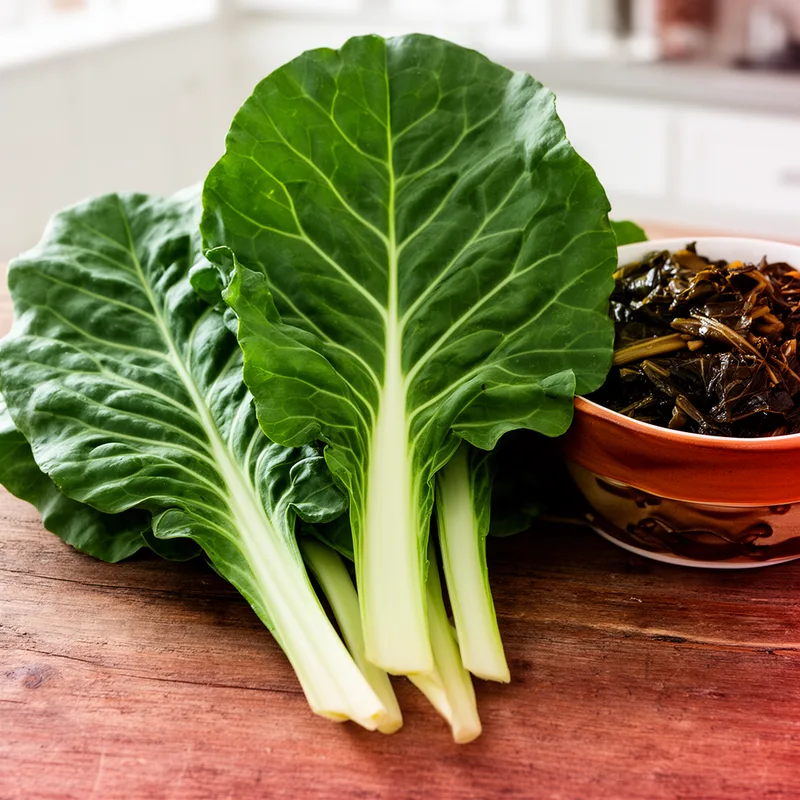
collard greens
 11
2.5
11
2.5

- noun
- /ˈkɒl.ərd ɡriːnz/
- US
- What did you expect—cornbread and collard greens three times a day?
- cook collard greens
- eat collard greens
- fresh collard greens
Loading YouTube…
Watch on YouTubeOr you could do like fried chicken, greens, macaroni, sweet potatoes, cornbread, collard greens.
- Or you could do like fried chicken, greens, macaroni, sweet potatoes, cornbread, collard greens.
- Like if you go into Whole Foods, you might see collard greens or you might see a kale or spinach.
- I'm on TV eating collard green rice and macaroni cheese and damn fried chicken.
Examples
-
Babs' peas and collard greens.
-
Is that healthier than eating rice, beans and collard greens every day?
-
I got some chicken and collard greens.
-
Go fix me some collard greens.
-
Anybody want some more collard greens?
-
And I really want a big pot of collard Greens.
-
I know you like hot sauce on your collard greens.
-
Y'all got to get some collard greens and some yams!
-
Brought you collard greens.
-
For dinner, I enjoyed a plate of tender collard greens cooked with garlic.
Synonyms
 43
2.4
43
2.4
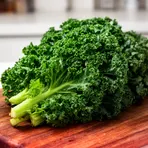
A hardy green vegetable with curly leaves like cabbage
 15
5.4
15
5.4
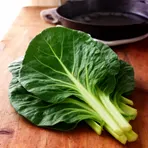
A leafy green like kale with large smooth leaves cooked as a vegetable
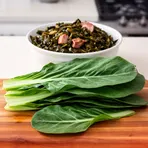
A leafy green vegetable with large smooth leaves often cooked

A hardy leafy vegetable like kale with thick curly leaves that do not form a head
How Tender

Surface Forms
Morphology
The meaning is directly compositional: 'collard' names a type of kale and 'greens' denotes leafy vegetables, so 'collard greens' straightforwardly refers to the edible leafy leaves of the collard plant. This follows a common English pattern (e.g., 'mustard greens', 'turnip greens') that is readily interpretable by learners who know both constituents, so the phrase is transparent.
Etymology
Collard greens may come from the old word collard, from 'cole' meaning 'cabbage', because these plants are like 'headless cabbages' with large flat leaves instead of a round head. That's why collard greens now means the leafy green vegetable people cook and eat.