
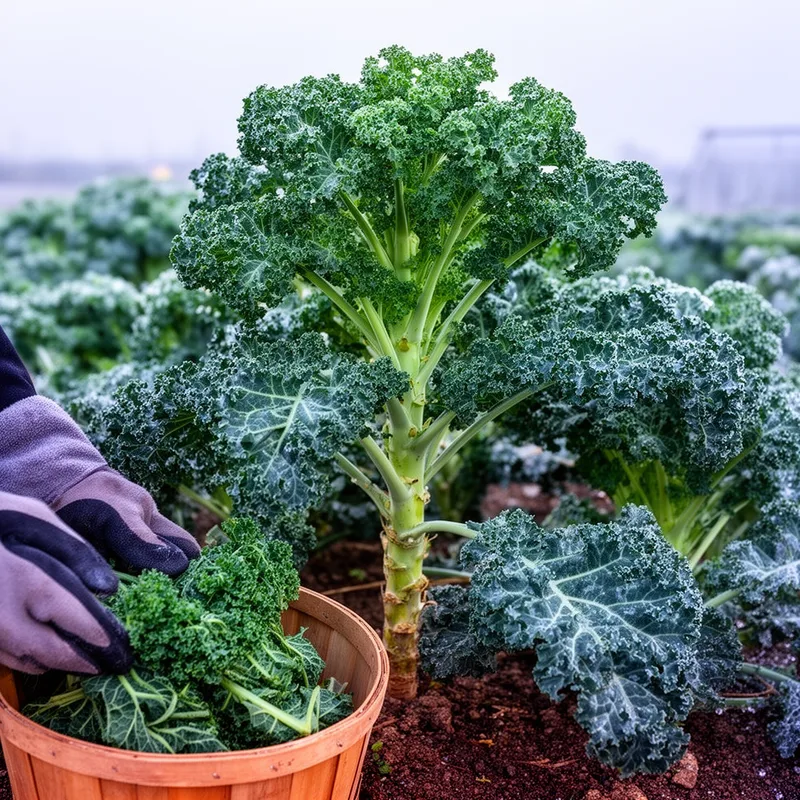
Brassica oleracea acephala
- noun
- Specialized
- Brassica oleracea acephala is often grown for its edible, nutrient-rich leaves.
Examples
-
Farmers prefer Brassica oleracea acephala because it tolerates cold weather very well.
-
I love to eat Brassica oleracea acephala in salads.
-
Many traditional dishes in Portugal use Brassica oleracea acephala as a main ingredient.
-
Have you tried Brassica oleracea acephala sautéed with garlic?
-
Brassica oleracea acephala is often grown for its edible, nutrient-rich leaves.
-
Many traditional dishes in Portugal use Brassica oleracea acephala as a main ingredient.
-
Have you tried Brassica oleracea acephala sautéed with garlic?
Synonyms
 43
2.4
43
2.4

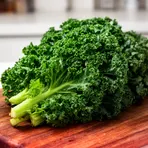
A hardy green vegetable with curly leaves like cabbage
 15
5.4
15
5.4
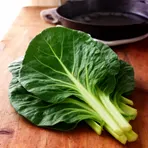
A leafy green like kale with large smooth leaves cooked as a vegetable
 11
2.5
11
2.5
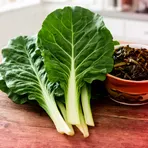
A leafy green vegetable with large dark leaves often cooked and eaten as a side

 1
8.4
1
8.4
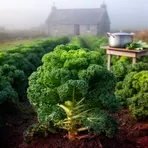
A leafy cabbage with coarse curly leaves often used in Scottish cooking
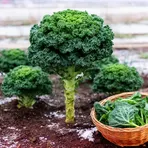
A leafy vegetable like cabbage with tough curly leaves

A type of cabbage grown as a vegetable with rough curly leaves that do not form a tight head
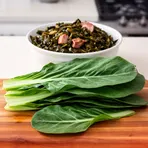
A leafy green vegetable with large smooth leaves often cooked
Surface Forms
Morphology
Brassica + oleracea + acephala
The genus name 'Brassica' will signal to learners who know it that this is a plant in the cabbage/cole crop family, so they can infer a vegetable. However, the Latin epithets 'oleracea' and 'acephala' are not common English words and do not convey the specific meaning 'kale/collard greens' to a B1 learner, so the full referent is not directly predictable from the constituents.
Etymology
Brassica oleracea acephala includes acephala, which means 'without a head', so picture a cabbage that never forms a tight round head and instead keeps loose, curly leaves. That's why this name refers to the hardy leafy vegetable we call 'kale' or 'collard greens' today.