

to collar
 6
6.1
6
6.1

- verb
- /ˈkɑːlər/
- In the latest chase, the detective had to collar the fugitive in an alleyway.
- want to collar
- going to collar
- collar someone and say
Examples
-
He got out just as I was about to collar him.
-
I say we collar him ourselves.
-
If we collar him, we'll be heroes.
-
Leave us to collar the thief.
Fiction book (1991) -
You're gonna come into days where you have to collar a dozen guys like that.
-
Two police officers were standing around, ready to maintain order or to collar anyone attempting to pick a pocket or sell tickets on the next flight of the alien spacecraft.
Fiction book (2001) -
The officer managed to collar the suspect before he could escape the scene.
-
As soon as they saw the thief, they quickly collared him and called for backup.
Synonyms
 ∞
3.4
∞
3.4
To detain someone and take them to the police station
 130
8.0
130
8.0
To catch someone for a crime, often while they are doing it
 125
3.9
125
3.9
To take someone to the police because they are suspected of a crime
 118
6.1
118
6.1
To arrest someone and put them in police custody
 81
7.2
81
7.2
To put metal bands around someone's wrists to stop their hands from moving
 40
5.8
40
5.8
Catch someone suddenly to stop or arrest them
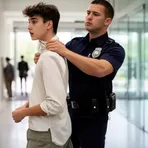
To grab and hold someone to stop them
Antonyms

Idioms


Compounds



 1
7.4
1
7.4
A stiff white band worn around the neck by Christian priests and ministers to show they are church leaders

 1
6.3
1
6.3
A flat collar with rounded ends that meet at the front and appears on women's and children's clothing


- Specialized
 1
7.8
1
7.8
A dog collar with blunt metal points that press the neck to help train the dog


- Specialized
A disease that makes the bark near the base of apple and pear tree trunks decay and form wounds


- Specialized
A cone-shaped collar put around a pet's neck to stop it licking or scratching wounds

- Archaic
A wide, stiff white collar that lies flat over a jacket and is often worn with school uniform

A short soft collar that stands up around the neck and is sewn to the top


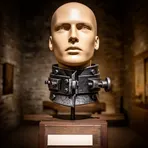

A high, close-fitting part of a shirt or sweater that folds over and covers the neck

How Forceful

Surface Forms
Etymology
Collar comes from the Latin collum 'neck', and to collar someone originally meant to grab their collar to stop them. That direct image explains why the verb now means 'to seize' or 'detain'.