

blue-collar
 61
3.6
61
3.6

- adjective
- /ˈbluːˌkɑːlər/
- Further, large numbers of blue-collar workers migrated out of the county during the 1970s.
- blue-collar workers
- blue-collar jobs
- white-collar or blue-collar
Loading YouTube…
Watch on YouTubeWe need to respect people in blue collar jobs for simple reasons.
- We need to respect people in blue collar jobs for simple reasons.
- You will see there are houses for blue collar workers and houses for white collar workers.
- It is a blueprint for blue collar people.
- Trump tried to call Biden's blue collar roots in Scranton, PA, into question.
- And it's worth noting that really here blue collar is what's actually holding ground.
- This is not like these are blue collar people that spend their money.
- I grew up in Jersey in very blue collar, lower middle class neighborhoods.
- You know, it's blue collar, you know, it's regular common folks, factory workers.
- He was a a labor activist, blue collar guy.
Examples
-
The factory employs many blue-collar workers who operate heavy machinery.
-
These are people who are very hardworking, blue collar Americans.
-
But anyway, you can see that blue collar employment has been very, very strong.
-
This was the absolute classic profile of a blue collar family of his generation.
-
I grew up in Jersey in very blue collar, lower middle class neighborhoods.
-
I come from a blue-collar background.
-
This is an honest, blue-collar neighborhood.
-
Until the 1920s, many blue-collar workers could not afford to buy a new suburban house.
Academic text (1994) -
He was a Glazer and just a blue collar type of man.
-
The featured speaker talked about growing up in a hard-working, blue-collar family.
Academic text (2015)
Synonyms
 56
3.4
56
3.4
Relates to people who do manual or factory jobs and earn wages
Antonyms

How Manual


Surface Forms
Morphology
Etymology
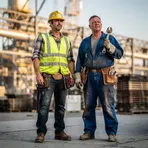
The word blue-collar comes from the blue shirts and collars that many factory and manual workers wore to 'hide dirt' and oil, and was used to show the difference from white-collar 'office' workers. So, blue-collar today describes jobs with physical or industrial work rather than desk work.