

childhood mischief
- noun
- Do you remember our childhood mischief?
Examples
-
Many friendships are formed through shared childhood mischief and adventures.
-
He often got into childhood mischief with his cousins during the summer holidays.
-
Stories of childhood mischief brought a smile to the teacher's face.
-
His childhood mischief often got him into trouble.
-
The children giggled as they shared stories about their childhood mischief, like the time they played pranks on their neighbors.
-
Her childhood mischief included sneaking cookies from the jar while her mother wasn't looking.
-
Growing up, his childhood mischief often involved chasing after the ice cream truck with his friends.
Synonyms

 34
2.7
34
2.7

Naughty actions often done by children that annoy people or cause small harm
 2
3.2
2
3.2
Behaviour that breaks rules and teases others, often by children
 1
4.6
1
4.6
Playful actions that cause small harmless trouble for fun
 1
6.0
1
6.0
The act of causing trouble or harm to others on purpose
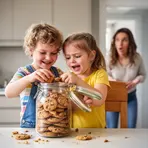
Doing playful, slightly naughty things that are not serious

Small playful acts that do no real harm
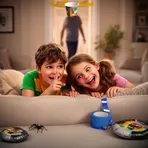
Doing small naughty things for fun
Antonyms


How Mischievous

Surface Forms
Morphology
The phrase combines 'childhood' (the stage of life) with 'mischief' (playful or mildly troublesome actions) in a straightforward noun–noun modification, so the overall meaning — playful or minorly troublesome behavior during childhood — is directly compositional. This follows common cross-linguistic patterns and standard English noun modification, so a B1 learner who knows both constituents will readily understand it.
Etymology
Childhood mischief paints a simple scene: the part childhood means being a child and the part mischief means small tricks, like hiding a toy or playing a silly prank. That's why the phrase means 'playful' or 'harmless' trouble by children.