

mischievousness
 1
4.6
1
4.6

- noun
- /ˈmɪs.tʃə.vəs.nəs/
 :
traviesura
:
traviesura
- "I think so too," Melissa smiled slowly, then instantly the mischievousness returned.
Examples
-
"We'll make time," she said, a ripple of mischievousness in her voice.
Fiction book (1991) -
As I have often told my students, there is almost a direct correlation between the mischievousness of a legal opinion and its length.
Blog text (21) -
"Well, gentlemen, and you, too, Inspector Field," he said, his face convulsed with mischievousness, "success to the crack."
Fiction book (1990) -
It was a smile, one full of all the mischievousness of his sister, but something else too: a terrible darkness that seemed somehow sinister.
Fiction book (2000) -
He had a flop of long brown hair, steel-rim glasses, and clear blue eyes with a glint of mischievousness, or perhaps impudence.
Academic text (1991) -
The child's mischievousness brought laughter and joy to the entire family.
-
His mischievousness often led to playful pranks that amused his friends.
-
Her mischievousness was evident in the way she playfully teased her classmates.
Synonyms
 34
2.7
34
2.7
Naughty actions often done by children that annoy people or cause small harm
 8
2.5
8
2.5
Being ready to play and have fun
 2
3.2
2
3.2
Behaviour that breaks rules and teases others, often by children
 2
3.2
2
3.2
A way of acting that is silly, playful, and often makes people laugh
 2
8.4
2
8.4
Noisy, wild actions that cause trouble or excitement
 1
2.5
1
2.5
The quality of being naughty or misbehaving
 1
6.0
1
6.0
The act of causing trouble or harm to others on purpose
 1
7.9
1
7.9
Playful mischief that teases or annoys other people
 1
3.5
1
3.5
A lively, playful mood that makes people move happily


 1
8.1
1
8.1
Playful or dishonest behavior that tricks people
 1
6.7
1
6.7
A playful, slightly naughty act like a small joke or trick
 1
8.8
1
8.8
Playful but sometimes dishonest behavior that annoys people
 1
5.8
1
5.8
A bold, slightly rude way of speaking or acting that is playful and shows little respect
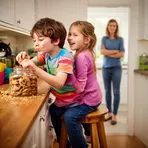
The act of behaving in a naughty, playful way

A playful, teasing way of behaving that surprises people

A liking for doing playful, slightly naughty tricks on other people

Small playful acts that do no real harm

A playful habit of doing mischief or telling small lies that amuses people

Funny or silly actions that try to make people laugh
Antonyms

How Mischievous

Surface Forms
Morphology
mischievousness = mischievous (transparent) = mischief + ous + ness
Formed by adding the productive noun-forming suffix '-ness' to the familiar adjective 'mischievous', yielding the quality or state.
Etymology
Mischievousness comes from mischief, which once meant a 'bad happening', and the start mis- shows 'wrong' or 'bad', like in mistake. So mischievousness is the quality of liking playful, slightly naughty trouble.