

cellulose
 10
5.7
10
5.7

- noun
- /ˈsɛl.jə.loʊs/
- Specialized
- Other ethanol feedstocks, such as raw cellulose and sugarcane, may do somewhat better.
- cellulose ethanol
- cellulose acetate
- cellulose fiber
Loading YouTube…
Watch on YouTubeYou know, it's like a, you know, crystalline cellulose as a as a filler.
- You know, it's like a, you know, crystalline cellulose as a as a filler.
- And, you know, there was a study that came out last week on carboxymethyl cellulose, which is a, a common emulsifier.
- We spent our lives in search of sugar and cellulose or shelter and shade.
- One is to consistently just give mice low grade food, basically mix their food with cardboard cellulose and that works.
Examples
-
Her research group is developing new fibers from cellulose and other renewable resource polymers.
Academic text (2005) -
And we can't digest cellulose, but termites can.
-
So most of the paper we get from cellulose is is from trees.
-
And the reason this this happens is that all of these plant foods are full of cellulose, which some people call fiber.
-
The chemical structure of cellulose also makes it incredibly versatile.
Academic text (2005) -
Over the next five years, he invented a new material called celluloid, made from cellulose, a compound found in wood and straw.
-
The carbon bonds in the cellulose of the wood make possible very strong and fatigue resistant structures.
-
Plants produce cellulose through the process of photosynthesis; cellulose fibers strengthen the stems, roots, and leaves.
Academic text (2005) -
Other pure sources of cellulose include flax, hemp, wood, straw, and jute.
Academic text (2005) -
Cellulose is a key ingredient in making cellulose, as it comes primarily from trees.
Compounds

- Specialized
A white powder that dissolves in water to make food and other products thicker and more stable

- Specialized
A man-made plastic from plant material treated with acid used to make film, cloth and eyeglass frames

- Specialized
A material people make by treating a plant material called cellulose with acid and use for plastics, films, and fibers

- Specialized
A very flammable material made from plant fibers and a strong acid, used in lacquers, early photographic film, and explosives
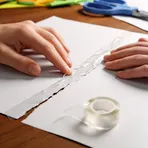

- Specialized
A chemical from plant fiber that is used to make rayon and cellophane
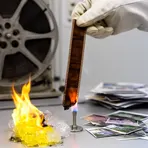

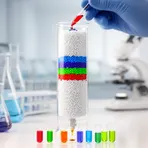
- Specialized
A lab material used in columns to separate charged molecules like proteins or DNA
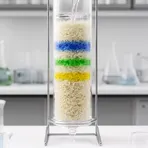
- Specialized
A lab material made from plant fiber used in columns to separate proteins and DNA by charge

- Specialized
A white sticky powder used to make food and medicine thicker and hold ingredients together
Surface Forms
Morphology
cellulose = cell (semi-transparent) = cellul + ose
The relation to 'cell' as material related to cells is clear, but the suffix '-ose' is a technical chemical suffix for sugars that many learners will not know.
Etymology
Cellulose comes from cell meaning 'small unit', the tiny parts of plants, and the ending -ose meaning 'sugar'. So cellulose is like a plant 'sugar' that builds strong cell walls, which is why it is the main part of wood and paper.