
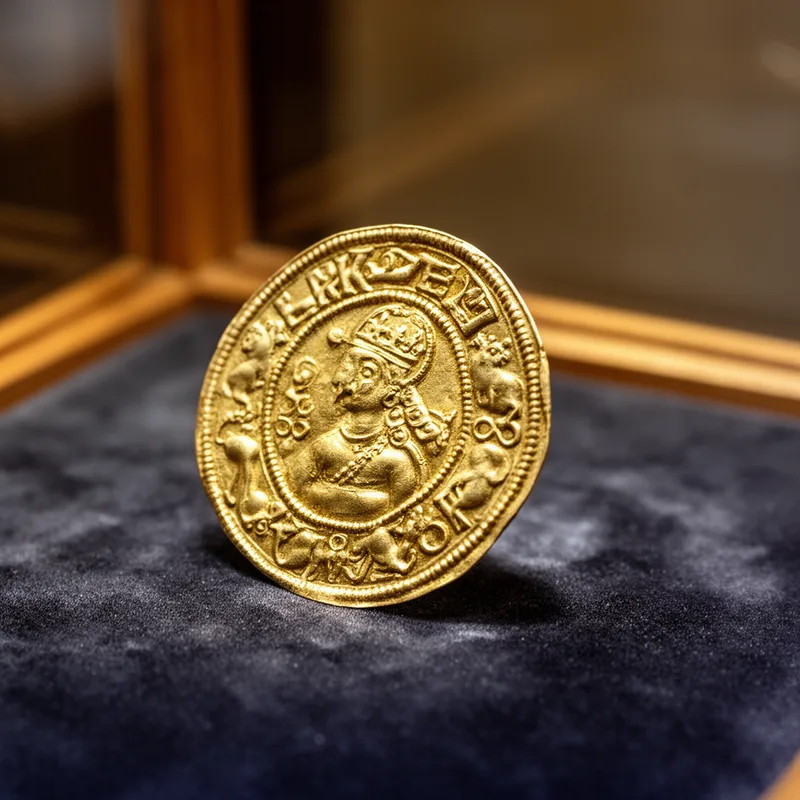
bracteate
- noun
- /ˈbræk.ti.ət/
- Archaic
- Archaeologists uncovered a bracteate that dated back to the medieval period, featuring symbols of power and authority.
- figure on the bracteates
- bracteates depict
- images on the bracteates
Examples
-
The oldest bracteates found in the north are clear imitations of Roman medallions.
Academic text (1999) -
Hauck argues that the central figure portrayed on most of the bracteates, and particularly on the c-bracteates, is a representation of Odin.
Academic text (1999) -
The images on later a-bracteates contain a hand or a bird in addition to the central profile.
Academic text (1999) -
Given the organizing principle, it is difficult not to look at the bracteates in terms of these four main groups.
Academic text (1999) -
The images on the B-bracteates contain several different motifs.
Academic text (1999) -
On the c-bracteates, a four-legged creature appears below the head.
Academic text (1999) -
The four-legged creature on this bracteate has horns and a tail, and a line protrudes from its mouth.
Academic text (1999) -
The runic inscriptions on this bracteate are stamped on the circular image itself and include the magic form alu.
Academic text (1999) -
Hauck identifies the birds that appear on the bracteates as ravens and uses them as evidence to support his iconographic analysis.
Academic text (1999) -
Hauck interprets the central profiled figure on these, as on most of the bracteates, as Odin.
Academic text (1999)
Synonyms
 13
9.9

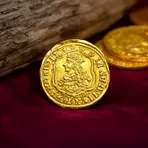
A gold coin used in Europe long ago


 1
9.9
A gold coin used in the Byzantine Empire and in medieval Europe
 1
9.9
A gold coin from the Byzantine Empire used in medieval Europe
 1
9.9
An old European coin used in the Middle Ages
 1
9.9
A very small coin from long ago in Scotland and the Netherlands
 1
9.9
An old Scottish coin from centuries ago that is worth very little

A gold coin from the Byzantine Empire used in Europe in the Middle Ages
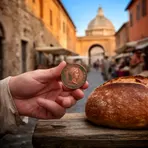
A small old copper coin used long ago in the area around Rome
Surface Forms
Morphology
Etymology
Bracteate as a name for a coin also comes from the Latin bractea, meaning a 'thin plate' used for thin metal discs long ago. That's why a bracteate is a thin, single-sided coin or ornament.