
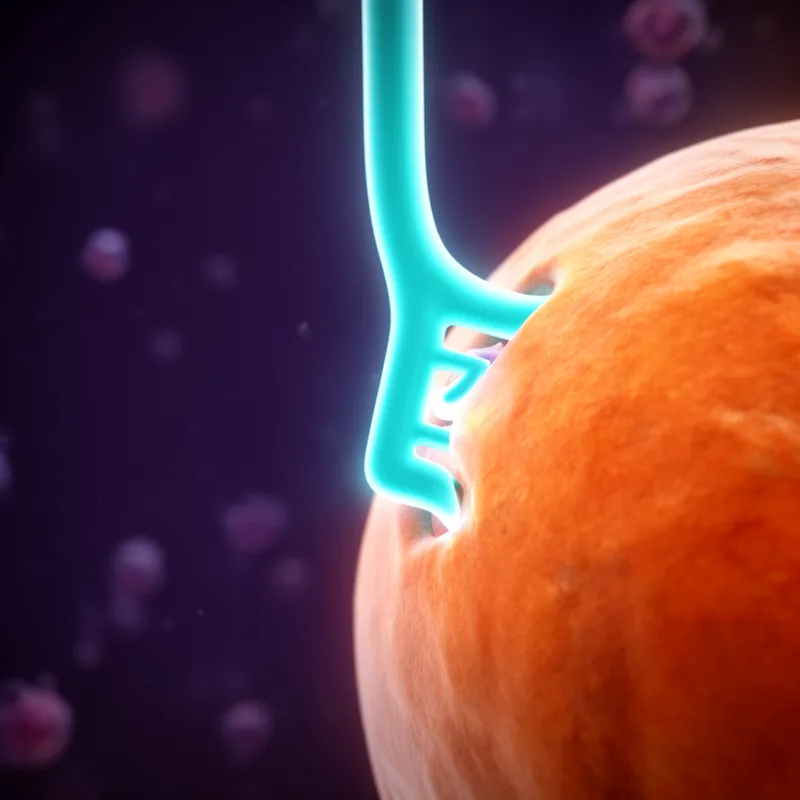
binding
 99
8.2
99
8.2

- noun
- /ˈbaɪndɪŋ/
- Specialized
- Research shows that the binding between proteins and DNA affects cell behavior.
- binding capacity
- binding site
- ligand binding
Loading YouTube…
Watch on YouTubeThe energy involved in in binding up these quarks is so high, so high.
- The energy involved in in binding up these quarks is so high, so high.
- SHBG, sex hormone binding globulin stands for sex hormone binding protein.
- It's not going to, you know, increase your androgens to an unnormal level of binding.
Examples
-
I fold it in the middle already and then we need a bias binding like this one.
-
The protein only works because it's a lock and key binding mechanism inside the insect's gut.
-
Their exceptionally smooth cutting action eliminates any binding of the cutting edges.
Academic text (1995) -
Interviews conducted by Leutz provide insight into current binding practice by contemporary practitioners.
Academic text (2012) -
The receptor for estrogen is a special molecule called a DNA binding factor.
-
Proton flow results from the binding of ADP, that is ADP.
-
Thus, the packet's signature both checks integrity and authenticates the binding between name, key, and content.
Academic text (2012) -
They have a slender spine and they have the type of binding collagen that holds all those fibers together.
-
The enzyme's binding to the substrate is crucial for the reaction to occur.
-
The binding of the two chemicals results in a stable compound.
Synonyms
 96
2.8
96
2.8
A force that pulls objects toward each other, like gravity or magnets
 2
6.1
2
6.1
Sticking firmly to a surface or another material

How well a material or glue holds things together

The ability to stick to another surface, like tape or glue

A force that pulls atoms together to form molecules
Antonyms

Compounds

- Specialized

 1
7.4
1
7.4
Energy needed to separate the parts of an atom, nucleus, or molecule
 1
3.3
1
3.3
A protective cover on the front, back, and spine of a book made of leather, cloth, or paper



- Specialized
A way of covering a book with the spine in one material and the covers in another

- Specialized
A book with its spine and most of the sides covered in a different material like leather
How Strong
46
6.0

- Specialized
36
6.7
- Specialized
99
8.2
- Specialized
38
7.0
Surface Forms
Morphology
Etymology
Binding comes from the old English verb bind, which means 'to tie' or 'hold together', and is like the word bond. So in science, binding is how one thing 'sticks to' or holds on to another.