
binding energy


 1
7.4
1
7.4
- noun
- Specialized
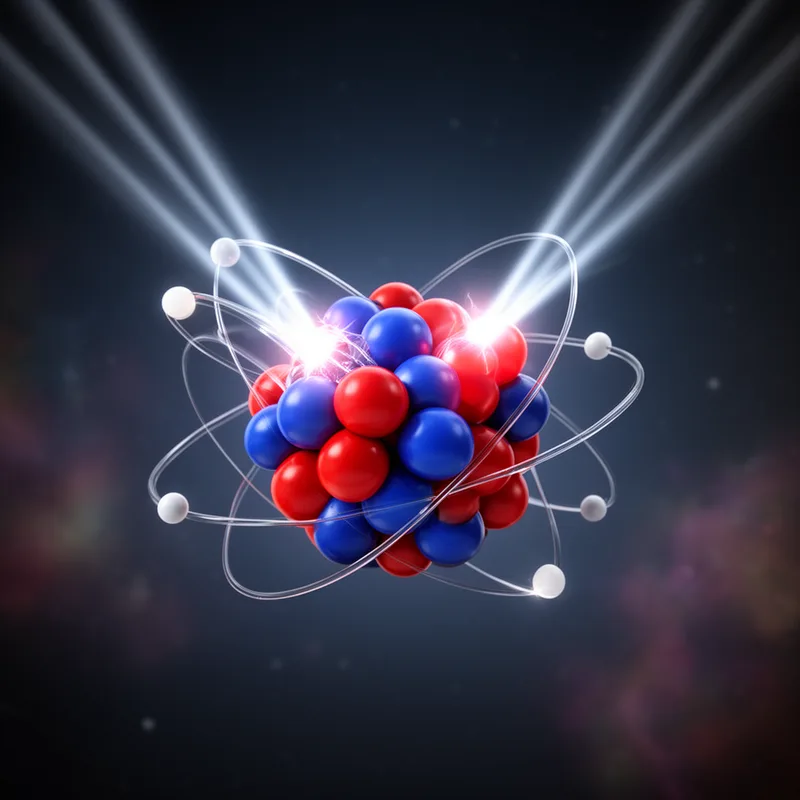
- In nuclear physics, the binding energy is equal to the mass defect and indicates how tightly protons and neutrons are held together.
- nuclear binding energy
- exciton binding energy
- gravitational binding energy
Examples
-
The substantial exciton binding energy determines the electronic processes at and near the heterojunction.
Academic text (2006) -
And this gives you a binding energy in MEV for a given nucleus.
-
Our way of seeing the world, made of four elements and nearly nothing but binding energy, changed dramatically.
Blog text (31) -
OK, Now let's just look at from physics at the amount of binding energy you get from different kinds of laws.
-
If the kinetic energy is larger than the binding energy, we'll call it a high speed collision.
-
If you want to break a molecule, you need energies above that binding energy, so you need frequencies at or above the ultraviolet.
-
The binding energies of neutron stars grow monotonically with increasing stellar mass.
Academic text (2012) -
With twenty-six protons in its nucleus, iron's distinction comes from having the least binding energy per nuclear particle of any element.
Academic text (2002) -
Molecular ions differ in mass from atomic ions due to the differing nuclear binding energies of the cluster atoms.
Academic text (1998) -
Rudolf Grimm and his colleagues from the University of Innsbruck measured the energy gap, or binding energy, of the pairs above and below the temperature predicted for the onset of superfluidity.
Academic text (2005)
Synonyms
The amount of energy needed to remove a particle, for example an electron or neutron, from an atom

The energy needed to break all the bonds in a molecule into separate atoms
Surface Forms
Morphology
The noun–noun compound transparently combines 'binding' (holding things together) with 'energy', so a learner who knows both words will infer it refers to the energy involved in the bond — effectively the energy that holds components together or must be overcome to separate them. This compositional pattern is common in scientific vocabulary and across languages, so the basic meaning is derivable by a B1 learner even if they miss specialized technical details about mass defect.
Etymology
The term binding energy comes from the simple idea of binding like glue and energy that holds parts together. It is the amount of energy you must give to pull the parts apart, so it means the energy needed to 'separate' a molecule, atom, or nucleus.