
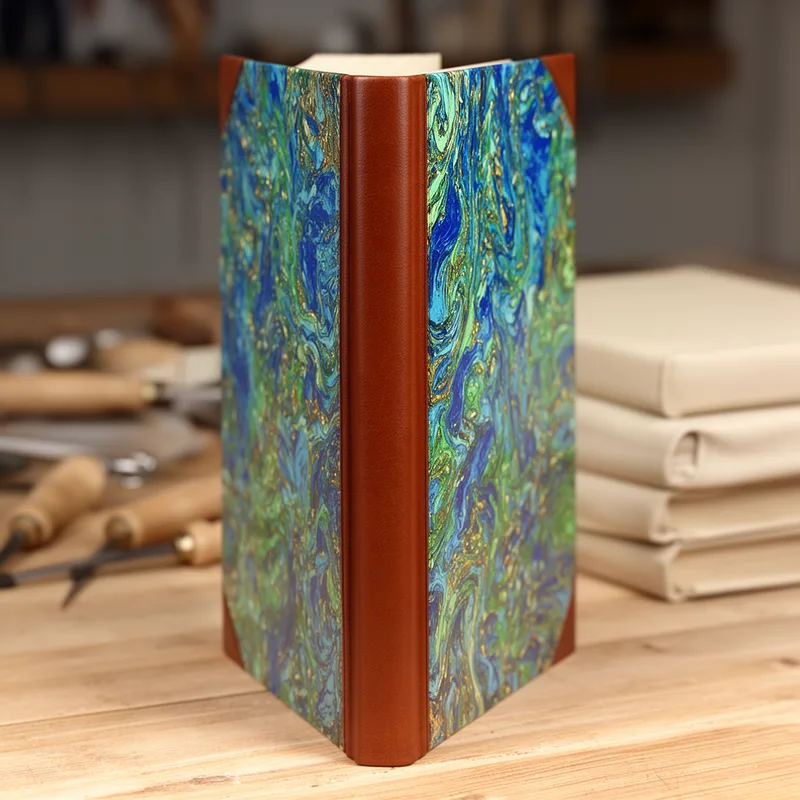
half binding
- noun
- /hæf ˈbaɪndɪŋ/
- Specialized
- The rare volume featured a half binding with a leather spine and marbled paper sides.
Examples
-
Collectors often appreciate half binding for its aesthetic contrast and durability.
-
The restoration included a new half binding that matched the book’s original design.
-
The book was made with half binding to enhance its durability.
-
I prefer half bindings for my collection of classic literature.
-
The rare volume featured a half binding with a leather spine and marbled paper sides.
-
Collectors often appreciate half binding for its aesthetic contrast and durability.
-
The restoration included a new half binding that matched the book’s original design.
How Covered


Surface Forms
Morphology
The noun is compositionally built from 'half' (partial) + 'binding' (the book-covering process), so a learner who knows both constituents can infer it refers to a partial or two-material method of binding. This follows a regular adjective + noun/gerund pattern common across languages, making the meaning directly derivable without special idiomatic knowledge.
Etymology
Half binding is named for the look of a book where only part of the cover is in a stronger material and the rest is in a different material. The word half shows that only one part is covered and binding means how the pages are held together, so the name describes a book bound in two materials, for example a leather 'spine' with paper 'covers'.