

armor
 20
3.4
20
3.4

- noun
- /ˈɑrmər/
- US
- The armadillo's natural armor helps it survive in the wild by preventing injuries.
- scale armor
Loading YouTube…
Watch on YouTubeSo you have a giant creature and they have a lot of armor plating.
- So you have a giant creature and they have a lot of armor plating.
Examples
-
Their bodies are armor-plated.
-
The stegosaurus was twenty feet long, with a huge bulky body and vertical armor plates along its back.
Fiction book (1990) -
Some kind of body armor.
-
You can make body armor out of that shell.
-
Three soldiers in full armor stand rigid on the platform.
Fiction book (1997) -
No arrow can pierce the giant's armor.
-
Rock-hard circles of bone, like plate armor, covered its body, and blunted spikes patterned its skull.
Fiction book (1992) -
The turtle carries its armor on its back to protect itself from predators.
-
Many marine animals, like crabs, have a hard armor that shields them from harm.
Synonyms
 296
1.0
296
1.0
A hard outer covering that protects animals, eggs, or nuts
 94
3.5
94
3.5
A hard outer covering on animals like insects or turtles that protects the body
 1
9.9
1
9.9
An outer protective covering like skin or a shell that protects a living thing
 1
2.7
1
2.7
An object placed over something to keep it safe from damage
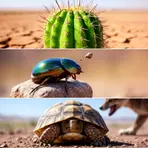
An outer layer on animals or plants that keeps them safe from harm
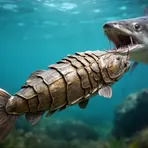
A hard outer covering on some animals that protects and supports the body

A protective layer added to something to stop damage
Idioms

- Informal
1
7.4
A small weakness in a person, group, or system that others can use
Compounds

- Specialized
31
4.1
Clothing made of strong material that protects the body from bullets and blows
 8
7.2
8
7.2
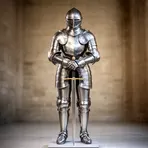
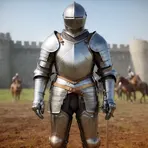
A full set of metal plates that cover the body and protect it in battle, often worn by knights

- Specialized
1
4.9
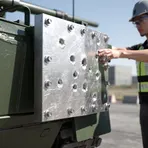
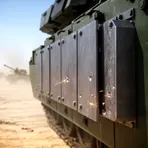
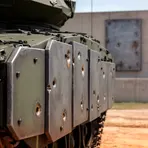
A thick metal sheet used to protect tanks, ships, or buildings from bullets and explosions
- Specialized
1
4.2
Thick hard metal plates that protect vehicles or buildings from enemy fire



- US
A protective shirt made of small metal rings linked together, worn by knights and soldiers
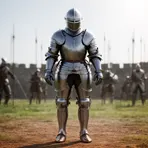
A complete suit of metal plates that covers the body and protects a knight in battle


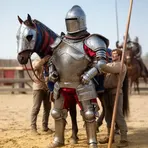
- Specialized
Heavy metal armor made for tournaments on horseback to protect riders from lances
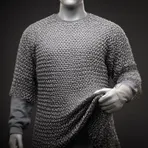
- Specialized
Plates of thick steel that protect vehicles or buildings from enemy fire

How Protective

Surface Forms
Etymology
Armor used for animals or plants borrows the idea from the old Latin arma ('arms' or 'weapons'), meaning protective gear. So calling a turtle's shell or a beetle's hard back 'armor' gives the image of a natural cover that defends the animal like a soldier's suit.